

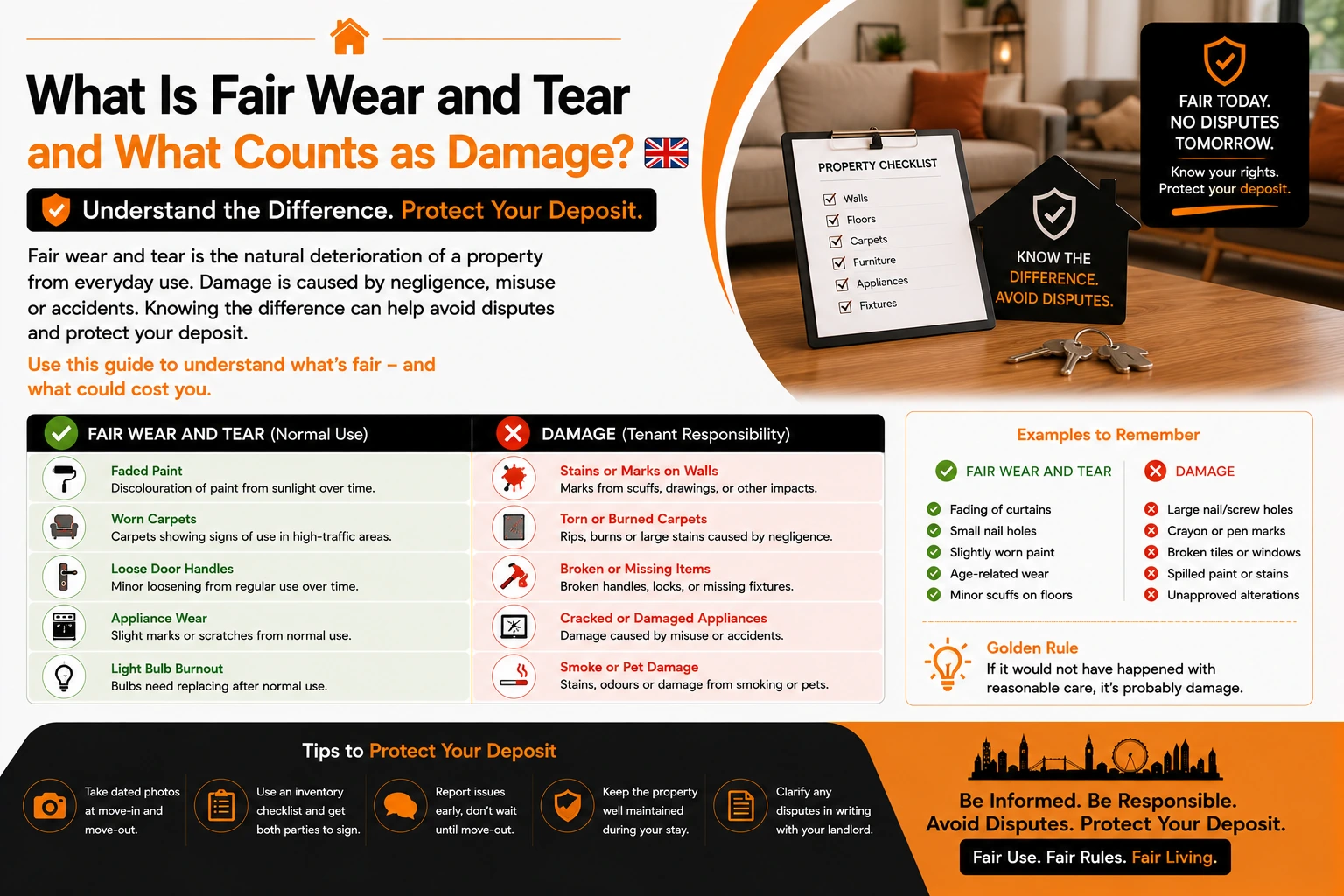
What Is Fair Wear and Tear and What Counts as Damage?
Move-out day can turn calm very quickly. The tenant says the carpet is just old. The landlord says the stain should be paid for. This is the real problem behind fair wear and tear. Some changes happen through normal living, while other problems come from careless use. This guide explains the difference with clear examples, move-out checks, proof, and deposit rules.
The Plain Meaning
Fair wear and tear means normal ageing from everyday use. A rented home will not look brand new after months or years of living. Carpets flatten, paint fades, and small scuffs may appear.
That does not always mean the tenant did something wrong. The key question is simple. Would this have happened through normal use, over normal time, with normal care? If yes, it is more likely to be wear, not damage.
Damage Means Avoidable Harm
Tenant damage is usually different. It is harm caused by carelessness, misuse, neglect, or an accident that should have been avoided. A burn in a carpet, a broken door, a cracked sink, or a missing remote may fall into this group.
Still, each case depends on proof. A mark does not become damage just because the landlord dislikes it. At the same time, a tenant cannot call every problem “normal use”. The facts matter.
The Normal Living Test
The easiest test is not emotional. It is practical. Ask what the item was like at the start, how long it was used, and whether the problem was avoidable.
| Question | Why It Matters |
| How old was the item? | Older items naturally experience more wear and have a shorter remaining lifespan. |
| How long was the tenancy? | A longer tenancy usually results in more normal wear and tear. |
| How many people lived there? | Higher occupancy often leads to greater everyday use and more visible wear. |
| What quality was the item? | Lower-quality items may deteriorate more quickly under normal use. |
| Was the harm avoidable? | Avoidable damage is more likely to be treated as tenant-caused damage rather than fair wear and tear. |
This test helps with rental property damage decisions. A cheap carpet in a busy hallway will age faster than a new carpet in a spare room. Fair judgment looks at the full story.
Common Examples: Wear or Damage?
Real examples make this topic easier. The same item can fall on either side, depending on the condition and proof.
| Item | More Likely Normal Wear | More Likely Damage |
| Carpet | Light fading, flattening, or minor wear from everyday use. | Burn marks, large stains, tears, or cuts. |
| Walls | Small scuffs, minor marks, or paint fading over time. | Large holes, drawings, chipped plaster, or deep scratches. |
| Oven | Light cooking marks and normal signs of use. | Heavy grease build-up, broken components, or misuse. |
| Furniture | Minor fading or gentle wear from regular use. | Broken legs, missing parts, or major structural damage. |
| Bathroom | Ageing sealant or slight discolouration. | Cracked sink, broken fittings, or neglected mould causing damage. |
This is why fair wear and tear should be judged with care. One small scuff after a long tenancy may be normal. A large burn or broken fitting is much harder to defend.
Cleaning Is Often the Grey Area
Cleaning causes many deposit arguments. A tenant should usually return the home to the same clean standard as move-in. But that standard must be shown clearly.
Deposit deductions for cleaning are stronger when there is proof of the starting condition. TDS says useful cleaning dispute evidence can include check-in and check-out reports, cleaning invoices, photos, and messages with the tenant.
Why the Inventory Matters
Memory is weak after a long tenancy. An inventory report gives both sides a starting point. It should show the condition of rooms, carpets, walls, furniture, appliances, keys, and cleaning.
A good report does not just say “carpet present”. It says whether the carpet was new, worn, stained, marked, or freshly cleaned. TDS guidance says landlords should use clear evidence when making claims and avoid unfair betterment, such as replacing old items at the tenant’s full cost.
Move-Out Check: Compare Like With Like
A move-out inspection should not be a hunt for every tiny mark. It should compare the home with the start record. The same rooms, items, and photos should be reviewed where possible.
This helps both sides stay fair. The question is not “is the home perfect?” The better question is “what changed since move-in, and why?” That keeps the discussion calmer and easier to prove.
Evidence That Helps in a Deposit Dispute
Good deposit dispute evidence can save a lot of stress. It can include signed inventory notes, dated photos, check-out notes, cleaning receipts, repair invoices, and messages about repairs.
GOV.UK says tenants and landlords can use a tenancy deposit protection scheme’s dispute service if they disagree about how much deposit should be returned. GOV.UK also says the deposit stays protected until the dispute is sorted.
Keeping Deductions Fair
Fair deposit deductions should be based on real loss. They should also consider age, starting condition, quality, and length of use. A landlord should not usually charge a tenant the full cost of a brand-new item if the old item was already worn.
This is where both sides need balance. Tenants should pay for real damage they caused. Landlords should not expect a used home to look untouched. A fair outcome sits between those two points.
Mistakes Both Sides Make
Move-out disputes often grow because people react too quickly. A tenant may deny every issue. A landlord may claim too much. Both can make the dispute harder.
| Mistake | Better Approach |
| No dated photos | Take clear, dated photos at both move-in and move-out. |
| Vague inventory | Describe each item’s condition clearly using simple, specific language. |
| Angry messages | Keep all communication factual, polite, and focused on evidence. |
| No cleaning proof | Keep cleaning invoices, receipts, or before-and-after photos. |
| Ignoring item age | Consider the item’s age and allow for fair wear and tear. |
Clear records make tenant damage easier to prove or challenge. Without records, both sides may rely on memory. That rarely ends well.
Final Verdict
A tired carpet is not the same as a ruined carpet. Fair wear and tear is normal change from daily living. Damage is avoidable harm, misuse, neglect, or loss. The fairest answer comes from clear photos, honest notes, and a proper comparison from move-in to move-out. If both sides use proof instead of anger, deposit decisions become much easier.
FAQs
1. What does fair wear and tear mean in a rental property?
It means normal change from everyday living. This can include light carpet wear, faded paint, or small scuffs. It does not usually include careless damage or missing items.
2. What counts as tenant damage at the end of a tenancy?
Tenant damage is harm beyond normal use. Examples may include burns, holes, broken doors, or large stains. The landlord still needs proof of the damage and cost.
3. Can a landlord charge for normal wear in a rental home?
A landlord should not charge for normal wear. A rented home will age through ordinary use. Any charge should be based on damage, proof, and fair cost.
4. Are carpet stains wear or rental property damage?
Light fading or flattening may be normal wear. Large stains, burns, or tears may be damage. The answer depends on photos, age, and move-in condition.
5. Can cleaning be taken from a tenant’s deposit?
Yes, cleaning may be taken if the home is returned less clean than it was at move-in. The landlord should show clear proof. Photos, check-in notes, and invoices can help.
6. Why is an inventory report important for deposit claims?
It shows the condition at the start. This makes the move-out comparison much fairer. Without it, deposit claims can be harder to prove.
7. What should landlords check during a move-out inspection?
They should compare the home with the original record. They should check cleaning, damage, missing items, keys, and meter readings. They should also allow for normal use over time.
8. What counts as deposit dispute evidence?
It can include photos, signed notes, emails, receipts, and inspection reports. Repair invoices and cleaning records can also help. Strong evidence should be dated and easy to follow.
9. Can tenants challenge unfair deposit deductions?
Yes, tenants can challenge unfair deductions. They should ask for a clear breakdown and proof. If both sides still disagree, the deposit scheme dispute service may help.
10. How can tenants avoid move-out damage disputes?
Tenants should take photos when they move in and out. They should report repairs early and keep messages. Cleaning the home to the move-in standard also helps.