

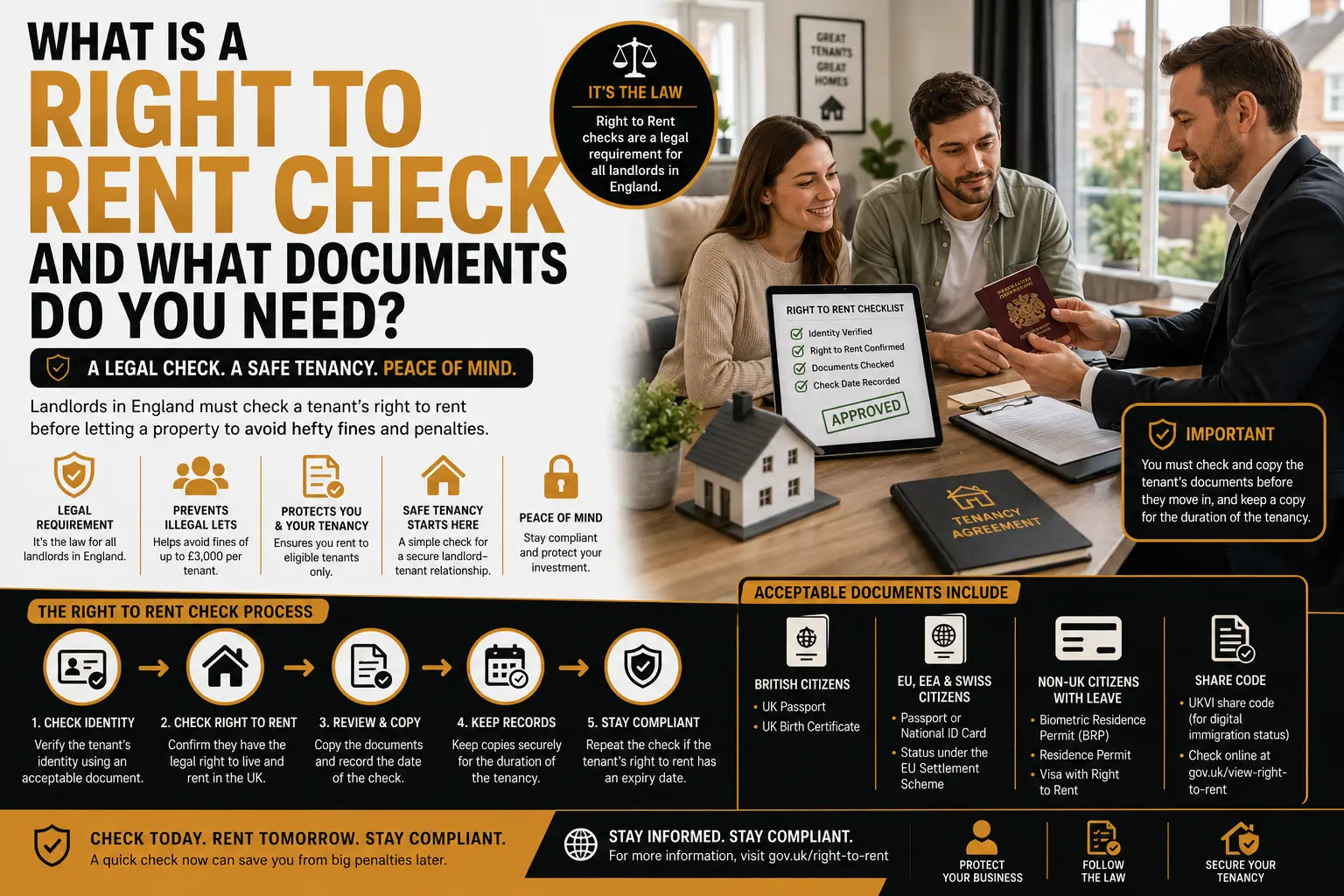
What Is a Right to Rent Check and What Documents Do You Need?
A right to rent check confirms whether an adult can rent a home in England. Landlords and agents must check every adult occupier. This includes British and Irish citizens.
The check must happen before the person moves in. It may use original documents, a digital service, or a tenant share code. People with limited permission may need another check later.
Landlords must keep clear, dated proof. They must also treat every applicant fairly. This guide covers documents, share codes, timing, records, and follow-up checks.
Who Needs to Be Checked?
The rule covers adults aged 18 or over. The property must be their main or only home. Their name need not appear on the tenancy.
This can include:
- Tenants and joint tenants
- Lodgers and subtenants
- Adult family members
- Other adult occupiers
Landlords must check every new adult occupier. They cannot select people by name, accent, or appearance. Some social housing and care homes are exempt.
Which Check Route Should You Use?
There are three main check routes. The right route depends on the person’s status. It also depends on the proof they hold.
| Check Route | Usually Used For | What Is Checked |
| Manual Document Check | Applicants presenting original accepted identity documents. | The person’s identity, document authenticity, and eligibility to rent. |
| Online Right to Rent Check | People with an eVisa or other digital immigration status. | The applicant’s share code, digital status, and official photograph. |
| Identity Service Provider (Digital Check) | British and Irish passport holders using an approved digital identity service. | Verified digital identity and passport validation result. |
| Home Office Landlord Checking Service | Applicants who cannot provide standard proof of their right to rent. | The Home Office confirms whether the applicant has the legal right to rent. |
A landlord cannot demand a share code from everyone. British and Irish citizens cannot get one. They may use accepted documents or a digital passport check.
From 1 October 2026, digital checks must use a registered Right to Rent provider. Manual checks will still remain valid. Home Office online checks will also continue.
What Documents Can British and Irish Citizens Use?
A current or expired British passport is usually accepted. The same applies to an Irish passport or passport card. A British naturalisation certificate may also be used.
A person without a passport may use two accepted documents. Common examples include:
- A UK driving licence
- A full birth certificate
- A recent employer letter
- Proof of current benefits
- A recent council letter
- A valid DBS certificate
The two documents must meet set rules. Some letters must be less than three months old. Landlords should check the latest Home Office list.
For a British passport right to rent check, the landlord compares the passport with the tenant. They then make a clear copy. The date of the check must also be recorded.
When Does a Tenant Need a Share Code?
Many people with an eVisa right to rent record use a share code. This includes many people with settled or pre-settled status. BRP and BRC holders must also use the online route.
Physical biometric cards cannot be accepted. The landlord enters the code and date of birth online. The result shows the person’s photograph and rental status.
A right to rent code has nine characters. It begins with the letter “R”. It stays valid for 90 days.
The landlord must save or print the result. They must also record the check date. A screenshot of the tenant’s own account is not enough.
How Should Original Documents Be Checked?
The landlord must see the original documents. The tenant must also be present. This can happen in person or by video call.
The landlord should check that:
- The photograph matches the tenant.
- Names and birth dates agree.
- The documents look genuine.
- There are no clear changes.
- Any name change has proof.
- Relevant permission has not ended.
The landlord does not need expert training. However, clear signs of damage should not be ignored. The documents must appear genuine.
A clear copy must then be made. Copy all key passport pages. Copy other documents in full.
When Must the Check Be Completed?
The timing depends on the tenant’s status. Someone may have an unlimited or time-limited right. The check must happen before occupation begins.
| Tenant’s Status | When to Check |
| Unlimited Right to Rent | Complete the Right to Rent check before the tenancy begins. |
| Time-Limited Right to Rent | Carry out the initial check within 28 days before the tenancy starts and schedule any required follow-up checks. |
| Tenant Moving from Overseas | Verify the tenant’s Right to Rent before they move into the property. |
| Existing Tenant with Limited Permission | Complete the follow-up check before the previous permission or check deadline expires. |
A correct check gives the landlord a statutory excuse. This is a legal defence against a civil fine. It only applies when every required step is followed.
What Records Must Be Kept?
Keep each document copy during the tenancy. Keep it for one year after the tenancy ends. Online results must be kept for the same period.
A right to rent documents file should include:
- The copied documents
- The online check result
- The date of each check
- Any Home Office reply
- The next follow-up date
Records must remain clear and secure. Landlords must also follow data protection rules.
When Is a Follow-Up Check Needed?
A follow-up right to rent check is needed for time-limited status. It is not normally needed for British or Irish citizens. Permanent status does not usually need another check.
The next check is due just before the later of:
- The end of the tenant’s permission
- Twelve months after the last check
The landlord should use a valid check route again. If the tenant can no longer rent, the Home Office must be told. The landlord should not act on guesses.
What If the Tenant Has No Documents?
Missing documents do not always mean no right to rent. The Home Office may hold the person’s papers. The tenant may also have a pending case or appeal.
The landlord should use the Landlord Checking Service. They will need the tenant’s Home Office reference. A reply should normally arrive within two working days.
The landlord should:
- Ask about the tenant’s current status.
- Use the official checking service.
- Keep the Home Office reply.
- Give the tenant a fair chance.
- Avoid creating new document rules.
A positive reply can protect the landlord. A negative reply means the tenancy should not begin. The decision must come from the Home Office.
Complete the Check and Keep the Proof
A right to rent check is more than viewing a passport. It may use original documents, an online check, or a digital service. Some cases need a Home Office decision.
Check every adult and follow the same fair process. Keep clear, dated proof. Repeat the check when a tenant has time-limited status.
From 1 October 2026, use a registered provider for digital checks. Always review the latest Home Office document list. This protects both landlord and tenant.
FAQs
1. What is a right to rent check?
It confirms whether an adult can rent in England. A landlord must complete it before move-in. The proof depends on the person’s status.
2. Who needs a right to rent check?
All new adult occupiers normally need one. This includes British and Irish citizens. Their name need not appear on the tenancy.
3. What documents prove a right to rent?
A passport is enough for many people. Others may use two accepted documents. Digital status holders normally use a share code.
4. Can I use an expired British passport?
Yes, an expired British passport is usually accepted. The photograph must still match the holder. The landlord must copy and date it.
5. Do British citizens need a share code?
No, British citizens cannot get one. They can use accepted original documents. A digital passport service may also be used.
6. Can a landlord accept a BRP card?
No, a physical BRP cannot be accepted. The tenant should provide a share code. The landlord must use the official online service.
7. How does a tenant get a share code?
The tenant uses the GOV.UK proof service. They need their birth date and status details. The correct code begins with “R”.
8. When must the check be completed?
It must happen before the tenant moves in. Limited status is checked within 28 days. Unlimited status can be checked earlier.
9. When is a follow-up check needed?
It is needed for time-limited status. The due date follows the Home Office rule. Permanent status does not need repeat checks.
10. What if a tenant has no documents?
Do not reject them at once. The Home Office service may confirm their status. Keep its reply as proof.