

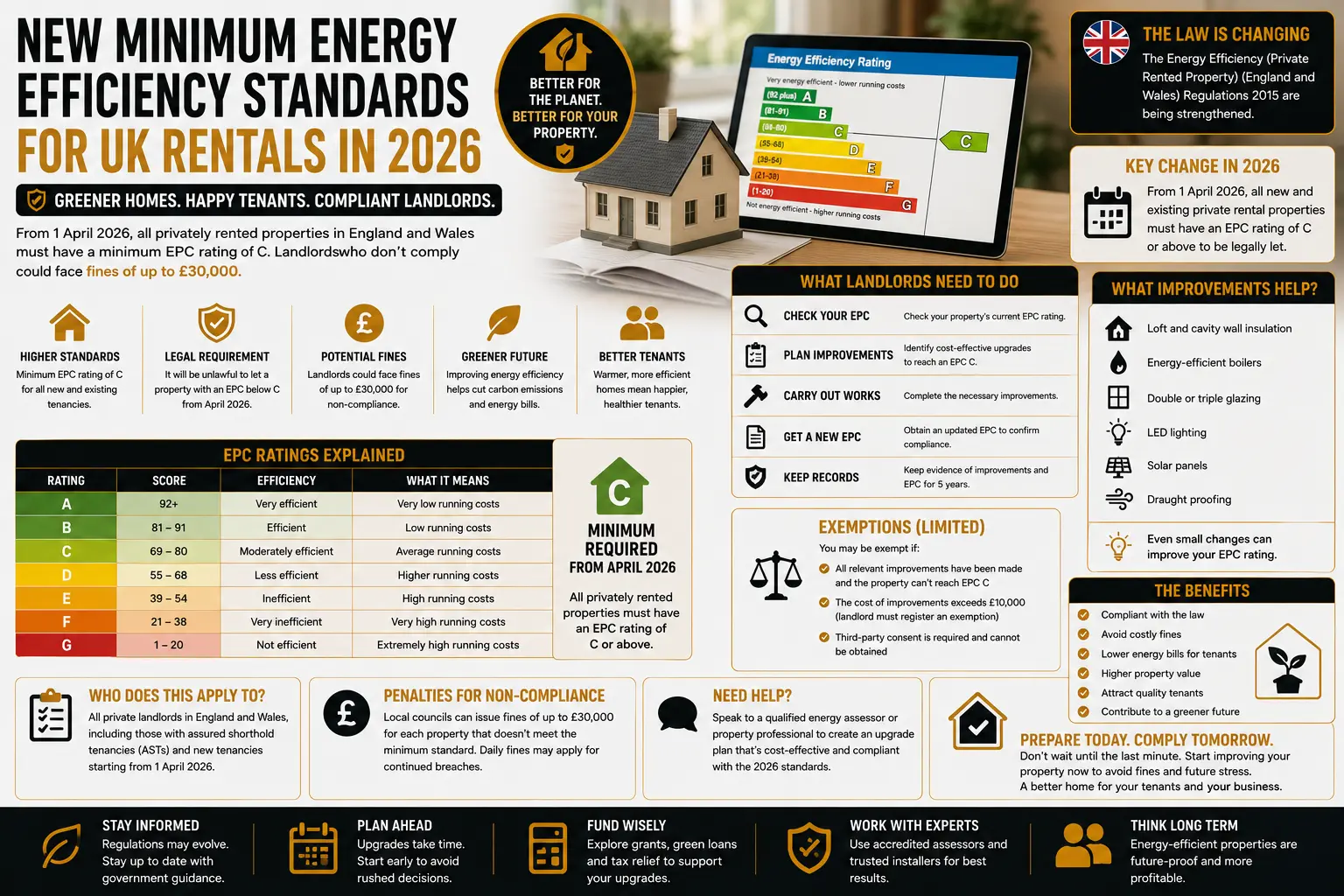
New Minimum Energy Efficiency Standards for UK Rentals in 2026
Minimum energy efficiency standards are changing, but landlords do not need to rush every property to EPC C in 2026. For most rentals in England and Wales, EPC E is still the current minimum. The bigger change comes in 2030, when tougher energy rules are planned. A £10,000 spending cap is also expected for many properties. New-style EPCs are now due from 2027. So, the smart move in 2026 is to check your EPC, spot weak areas, and plan upgrades early.
Do You Need to Upgrade Your Rental Property in 2026?
For many landlords, the answer is not yet.
If your property already has an EPC E or above, you can usually keep letting it under the current rules. A property rated F or G may need work or a valid exemption.
The important point is timing. The tougher minimum energy efficiency standards are planned for 2030, not 2026.
So, you have time. But leaving every upgrade until the last minute could make the work more costly and stressful.
Is EPC C Mandatory for Landlords Now?
No. EPC C rental properties are not yet required across England and Wales.
The current EPC rules for landlords still use EPC E as the normal minimum. However, the government plans a tougher standard from 1 October 2030.
That gives landlords a clear direction. Homes below C may need work over the next few years.
What Will Be Different in 2030?
The future rules will not rely on one EPC letter alone.
Under the planned minimum energy efficiency standards, the home will be judged more closely on how well it keeps heat. Heating systems and smart energy use may also count.
In simple terms, future checks may look at:
- How well the home is insulated
- How much heat does it lose
- How efficient is the heating system
- How well can energy be controlled
This means landlords should focus on useful improvements, not just chase an EPC letter.
How Much Could the Upgrades Cost?
The planned spending cap is £10,000 per property over ten years. That does not mean every landlord must spend £10,000.
If your property reaches the required level after £3,500 of work, you stop there.
The government expects the average cost for homes below the future standard to be around £5,400. Some work completed from October 2025 may also count towards the cap.
For lower-value homes, a smaller spending limit may apply.
Which Improvements Are Worth Looking At First?
Do not start with expensive work just because it sounds impressive.
The best landlord energy efficiency upgrades depend on the property. Start with simple areas that lose heat or waste energy.
Possible improvements include:
- Loft insulation
- Wall insulation
- Draught proofing
- Better windows
- Heating controls
- More efficient heating
- Solar panels
Check the EPC recommendations first. Then compare costs before booking work.
What If Your Property Still Cannot Meet the New Standard?
The future MEES regulations are expected to keep some exemption routes.
Possible EPC exemptions may apply where work costs too much, needs consent, or is not suitable for the building. Some low-value homes may also have a lower cost limit.
An exemption is not an automatic pass. You will need to meet the rules and keep the right evidence.
Are New EPCs Starting in 2026?
No. This is another area where older advice can be confusing.
The new EPC system was once expected in 2026. That timetable has changed.
New domestic EPCs are now due from the second half of 2027. They are expected to show several energy measures rather than one main score.
What Should Landlords Do Now?
2026 is a good year to plan rather than panic.
Start with these steps:
- Check each property’s EPC
- Deal with F and G homes first
- Read the recommended improvements
- Get more than one quote
- Keep invoices for completed work
- Plan bigger jobs between tenancies
- Review the new EPC rules again in 2027
Good planning can spread the cost over several years.
Are the Landlord Rules the Same Across the UK?
No. These minimum energy efficiency standards mainly relate to private rentals in England and Wales.
Scotland is developing its own energy rules and timetable. Northern Ireland also follows a separate system.
Landlords with properties in more than one UK nation should check the rules for each location.
What Does This Mean for Landlords?
The new minimum energy efficiency standards should be treated as a 2030 target, not a 2026 emergency. EPC E remains the current minimum for most covered rentals in England and Wales. The best step now is to find which homes are likely to need work. Start with simple, good-value upgrades and keep clear records of what you spend. Watch for the new EPC system from 2027. Planning early gives you more choice and less pressure before 2030.
FAQs
1. Is an EPC C required for rental properties in 2026?
No. EPC E is still the usual minimum in England and Wales. Tougher rules are planned for 2030.
2. What is the current minimum EPC rating for landlords?
Most covered rentals need at least EPC E. F and G homes normally need work or an exemption. Rules may vary according to the case.
3. When will the new landlord EPC rules start?
The main planned deadline is 1 October 2030. There is no general EPC C deadline in 2026. Landlords can prepare before then.
4. How much may landlords need to spend on EPC upgrades?
The planned cap is £10,000 per property. Many homes may need much less. The actual cost varies as per the work required.
5. What happens if my property cannot reach the new standard?
You may qualify for an exemption. The reason must meet the legal rules. Evidence will normally be required.
6. Will my current EPC C still count?
It may count during the move to the new system. Transition rules are planned for some existing EPC C homes. Check the certificate date and future rules.
7. When will the new EPC certificates start?
New-style domestic EPCs are planned from the second half of 2027. The launch was moved back from 2026. Existing EPCs remain in use for now.
8. What upgrades can improve a rental property’s EPC?
Insulation, draught-proofing, heating controls, and better heating may help. Solar panels may also help some homes. The best option depends on the property.
9. Do the same EPC rules apply in Scotland?
No. Scotland has its own energy rules and timetable. Landlords should follow Scottish guidance.
10. What are the EPC requirements for landlords in 2030?
England and Wales plan a tougher rental standard from October 2030. The new system will use updated energy measures. Exact compliance will depend on the final rules.