
What Is an EPC rating and How Does It Affect Your Energy Bills?
Two homes can look similar but cost very different amounts to heat. An EPC rating helps explain why by showing how well a property uses energy. It can point to heat loss, poor insulation, weak windows, old heating, and other issues that may affect energy bills.
The report is not your exact bill, because habits, tariffs, and weather still matter. This guide explains the rating, rental rules, EPC recommendations, and what tenants or landlords should check before making decisions.
EPC in Simple Terms
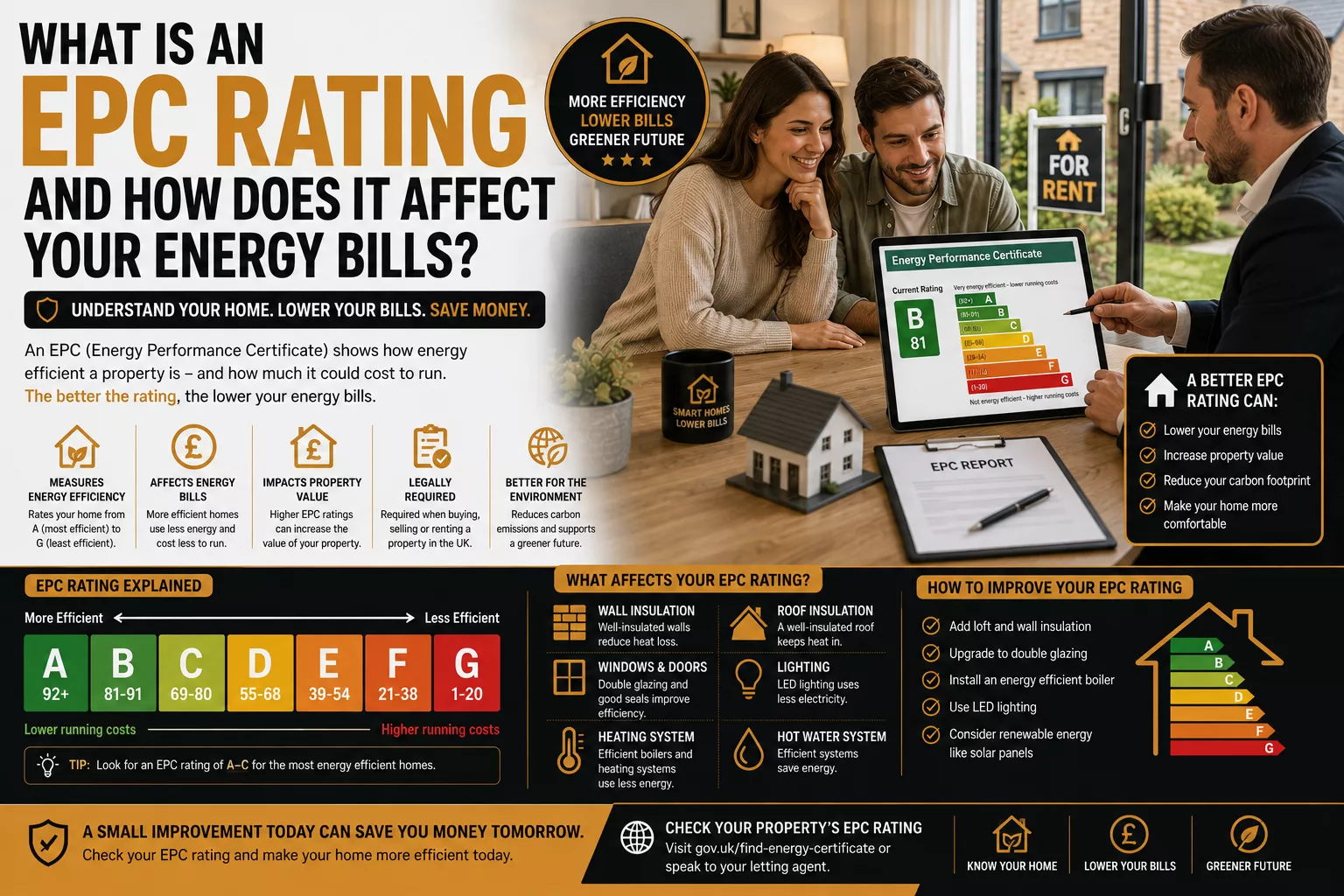
An energy performance certificate is like an energy label for a home. It gives the property a rating from A to G. A is more efficient, while G is the least efficient. GOV.UK says an EPC shows a building’s energy rating and gives advice on how to improve it. It is also valid for 10 years, unless a newer EPC is produced.
An EPC rating is not your exact gas or electric bill. It is more like a warning sign. It tells you how well the home may hold heat, use energy, and perform compared with other homes.
Why the Score Can Affect Bills
A lower-rated home may need more heat to feel comfortable. Poor insulation, draughts, old heating, and weak windows can all waste energy. That can push energy bills higher, especially in winter.
Good home energy efficiency means the home uses less energy to do the same job. It may stay warmer for longer after the heating turns off. It may also feel less draughty and easier to manage day to day.
Where Heat and Money Escape
The useful part of an EPC is not only the letter. It is the clues behind the score. Many EPC recommendations focus on stopping heat from escaping.
| Home Feature | How It Can Affect Energy Bills |
|---|---|
| Loft Insulation | Reduces heat escaping through the roof, helping lower heating costs. |
| Wall Insulation | Improves heat retention and reduces energy loss throughout the property. |
| Windows & Glazing | Double or triple glazing helps prevent heat loss and improves efficiency. |
| Boiler or Heating System | Modern, efficient systems generally cost less to run than older boilers. |
| Draught Proofing | Sealing gaps around doors and windows helps keep warm air inside. |
| Roof Condition | A well-maintained roof improves insulation and reduces unnecessary heat loss. |
| Heating Controls | Smart thermostats and programmable timers help reduce unnecessary energy use. |
Small gaps can cause real waste. A cold hallway, thin loft insulation, or poor windows can make the boiler work harder. That is why the report can help you spot weak areas.
What the EPC Does Not Tell You
An EPC is useful, but it is not perfect. Your real bills still depend on how you live. A family at home all day may use more energy than one person who works away.
Tariffs, weather, appliances, heating habits, and working from home also matter. So do not treat the score as a fixed bill promise. Treat it as a guide to likely energy use and comfort.
What Tenants Should Check
A rental property EPC should be checked before you agree to rent. Look at the current rating, estimated use, and suggested improvements. Also look for signs of cold rooms, damp corners, or draughty windows during viewing.
For private rented homes in England and Wales, GOV.UK says landlords must usually improve F- or G-rated properties to E before letting, unless a valid exemption applies. This is the current minimum EPC rating rule for many domestic private rentals.
What Landlords Should Know
A rental property EPC is not just paperwork. It can affect marketing, tenant interest, legal duties, and future upgrade plans. A warmer home can also reduce complaints about cold, damp, and high bills.
Landlords should check the minimum EPC rating before advertising a property. Rules can change, so current guidance should be checked before making decisions. GOV.UK has also consulted on raising the required standard for private rented homes to EPC C by 2030.
How to Read Upgrade Advice
Do not ignore the advice page. The EPC recommendations can show which changes may help most. Some fixes are simple, while others cost more and need planning.
| Upgrade Type | Typical Examples |
|---|---|
| Low-Cost Improvements | LED lighting, draught proofing, radiator reflector panels, smart plugs. |
| Medium-Cost Upgrades | Loft insulation, smart heating controls, hot water cylinder insulation, efficient radiators. |
| High-Cost Improvements | Double or triple glazing, cavity or solid wall insulation, new boiler, air source heat pump. |
| Renewable Energy Systems | Solar panels, battery storage, solar water heating, ground source heat pump. |
Start with comfort and waste. A low-cost fix may not change everything, but it can still help. Bigger work should be planned around cost, saving, disruption, and long-term use.
Better Rating, Better Comfort?
Better home energy efficiency can mean a warmer home. It may also mean fewer cold spots and less need to keep turning the heating up. This can help comfort as well as cost.
Still, do not expect magic. A good score does not mean bills disappear. It simply means the home should use energy more sensibly than a weaker-rated one.
Common EPC Mistakes
People often look only at the letter. That can hide the useful detail. The notes below the score often explain where the home wastes energy.
| Common Mistake | Better Approach |
|---|---|
| Focusing only on the EPC rating | Read the full EPC recommendations to understand where improvements are needed. |
| Ignoring the certificate date | Check that the EPC is still valid and reflects the property’s current condition. |
| Assuming estimated bills are exact | Compare EPC estimates with your actual energy usage and supplier tariffs. |
| Overlooking rental requirements | Ensure the property meets the minimum EPC standard for letting. |
| Ignoring low-cost improvements | Start with affordable upgrades such as LED bulbs, draught proofing, and insulation. |
| Not reviewing recommended upgrades | Prioritise improvements that offer the greatest energy savings for the cost. |
This matters because energy bills depend on both the building and the person using it. The score gives a guide. Your habits still shape the final cost.
Final Verdict
An EPC is not your bill, but it can show where a home may waste energy. The EPC rating helps tenants understand comfort, heating costs, and possible cold spots before renting. It also helps landlords see which upgrades may improve the property. Always read the full report, not just the letter score.
If you need help understanding rental property checks or finding a suitable home, Home World Management can guide you through the process with clear and practical support.
FAQs
1. What does an EPC score mean on a property?
An EPC score shows how energy efficient a property is. The scale runs from A to G, with A being better. It helps people compare homes before renting or buying.
2. What does an energy performance certificate show?
An energy performance certificate shows the home’s energy rating. It also gives advice on possible improvements. The report can help you spot where energy may be wasted.
3. How can an EPC affect my energy bills?
A lower score can mean the home needs more heating. Poor insulation and draughts can waste energy. Your own usage still affects the final bill.
4. Is an EPC the same as my actual bill?
No, it is not the same as your bill. It is an estimate based on the property. Your real cost depends on use, tariff, and weather.
5. What is a good EPC score for renting?
A higher score is usually better for comfort and running costs. Many tenants prefer homes rated C or above. Always read the full report, not only the letter.
6. What is the minimum EPC rating for rental property?
For many rented homes in England and Wales, the minimum is usually E. Some properties may have valid exemptions. Landlords should check current rules before letting.
7. How long does an EPC last?
An EPC usually lasts for 10 years. A newer one can replace the old certificate. You can check the date before relying on it.
8. Can a low EPC make a home colder?
Yes, a low score can point to heat loss. The home may have poor insulation, old heating, or draughts. This can make rooms harder to keep warm.
9. Which EPC upgrades can lower energy use?
Common upgrades include insulation, heating controls, and draught proofing. Better windows or heating systems may also help. The best choice depends on the property.
10. Should tenants check the EPC before renting?
Yes, tenants should check it before signing. It can show likely comfort and running cost issues. It can also help you ask better viewing questions.