

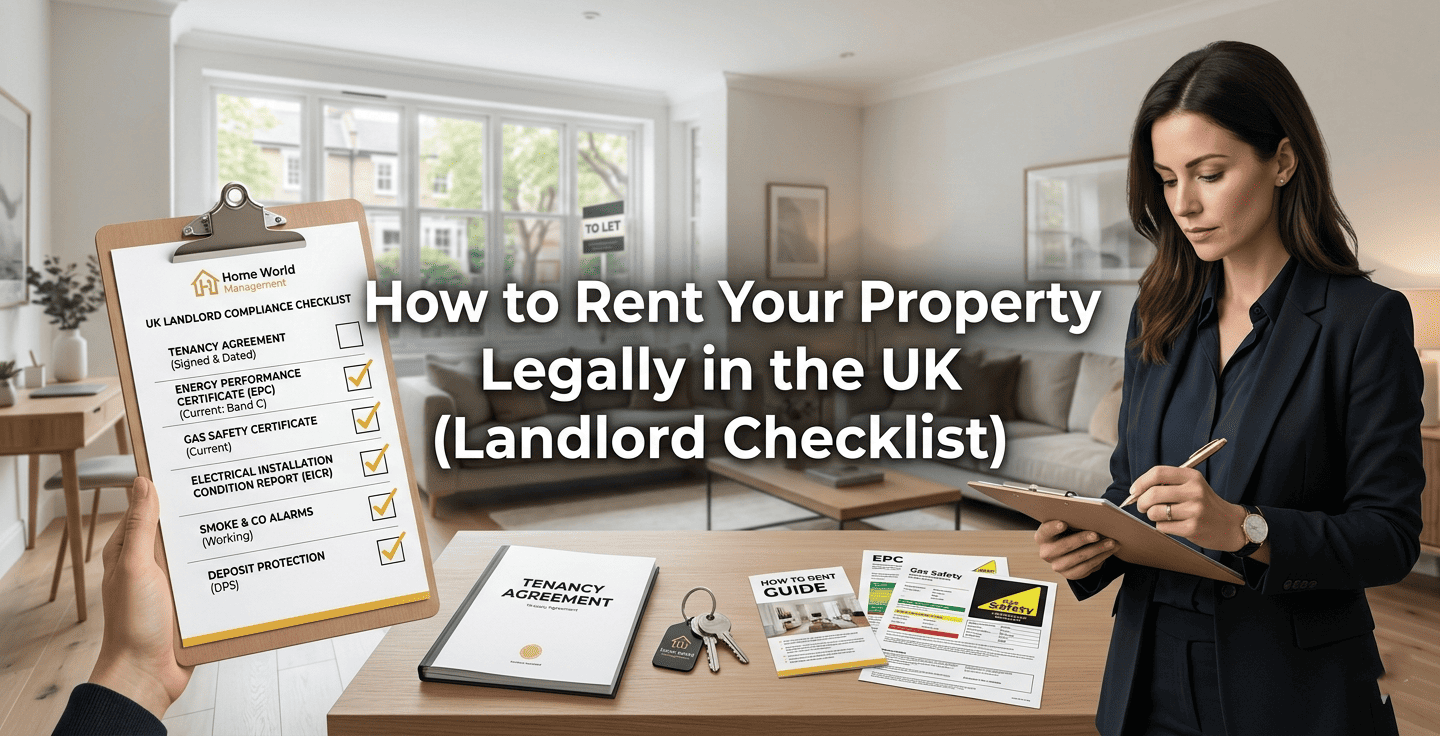
How to Rent Your Property Legally in the UK (Landlord Checklist)
To rent out property legally in the UK, you need six things: lender permission, an EPC (rating E), a gas safety certificate, an electrical report, deposit protection (DPS within 30 days), and Right to Rent checks. Also, provide a written tenancy agreement and the “How to Rent” guide. Eviction requires proper notices, such as Section 21 or Section 8.
This guide covers legally renting out your home, turning it into a rental property, and buying a property to rent out – everything a UK landlord must know.
Start with Permission
Before you do anything, check if you are allowed to rent out property legally. If you have a mortgage, ask your lender for “consent to let” or switch to a buy-to-let loan. If you are owning property to rent out that is leasehold, check your lease for any ban on subletting. Skipping this step can break your contract and cost you dearly.
Get Your Safety Certificates in Order
You cannot rent out property legally without three key documents. First, an Energy Performance Certificate (EPC) with a rating of at least E. Second, a gas safety certificate, renewed every year. Third, an Electrical Installation Condition Report (EICR). These protect your tenants and keep you on the right side of the law. When turning your home into a rental property, book these checks early. Also, tell your home insurer, as standard policies do not cover tenancies.
Protect the Deposit & Provide Paperwork
Every deposit you take must go into a government-backed scheme like DPS, TDS, or MyDeposits within 30 days. You also need to give your tenant a “How to Rent” guide and a written tenancy agreement. If you give your property on rent without protecting the deposit, tenants can claim compensation of up to three times the deposit amount. Also, check if you need a House in Multiple Occupation (HMO) licence for shared houses.
Carry Out Right to Rent Checks
UK law requires you to check every tenant’s right to rent before they move in. Ask for a passport, biometric residence permit, or share code from the Home Office. Make copies and keep them safely. Many new landlords want to give my property on rent quickly, but rushing this step is a serious mistake. If you rent to someone without the right documents, you could face a fine of up to £5,000 or even prison.
Handle Repairs and Inspections
Once you rent out property legally, your duties do not stop. You must fix heating, water, and structural issues promptly. Plan regular inspections every three to six months, but give at least 24 hours’ written notice. Keep records of all repairs and communication. Also, understand that legally renting out your home means you cannot enter the property without permission, even for inspections. This protects you from the later conflicts.
Know the Eviction Rules
If things go wrong, you cannot simply change the locks. You must follow strict eviction procedures using Section 21 (no-fault) or Section 8 (tenant at fault) notices. Courts are busy, so the process can take months. Many landlords learn this after costly mistakes. When buying property then renting out, understand that getting your property back is never quick or easy. Buying property then renting out without knowing the eviction law is a risk you should not take.
Final Advice for Landlords
Rent out property legally by following every rule in this guide. Keep good records, treat your tenants fairly, and never cut corners on safety. Legally renting out your home takes effort, but it protects your investment and your peace of mind. Do it right from the start, and your UK rental journey will be smooth and profitable.
Landlord Checklist: Rent Out Property Legally in the UK
Before you rent out property legally, tick these boxes:
Task Done?
- Mortgage or lease permission obtained
- EPC certificate (rating E or above)
- Gas safety certificate (annual)
- Electrical condition report (EICR)
- The deposit is protected for 30 days
- “How to Rent” guide given to tenant
- Right to Rent checks completed
- Written tenancy agreement signed
FAQs
How to legally rent out your house?
Start by getting permission from your mortgage lender. Then obtain an EPC, gas safety, and electrical certificate. To rent out property legally, never skip deposit protection or Right to Rent checks.
Can you rent out your mortgaged property?
Yes, but you need consent from your lender first. Without permission, you are breaking your mortgage contract. Legally renting out your home starts with asking your bank.
Can you rent an apartment you are renting?
Only if your tenancy agreement gives written permission. Most landlords strictly forbid subletting. Break this rule, and you could face eviction.
Can you rent your first property without experience?
Yes, but take it slowly and follow every legal step. Give your property on rent only after you have all the safety certificates ready. Consider using a letting agent for help.
Should I rent my property or sell it?
Rent if you want long-term income and can handle legal duties. Sell if you need cash quickly and do not want landlord responsibilities. Turning your home into a rental property works best for patient owners.
Do I need a license to rent out my property in the UK?
You need a licence for a House in Multiple Occupation (HMO) with five or more people. Some councils also require additional licensing for smaller HMOs. Before starting, you should always verify your local council rules.
What happens if I rent out my property without telling my mortgage lender?
Your lender can demand full repayment of your mortgage immediately. They may also charge fees or increase your interest rate. If you want to give my property on rent, always tell your lender first.
How to get the most out of your legal property while staying legal?
Keep your property well-maintained to attract long-term tenants. Raise rent in line with market rates using proper Section 13 notices. Owning property to rent out becomes profitable when you follow every rule.
How long does it take to evict a tenant legally in the UK?
Eviction takes four to seven months on average using Section 21 or Section 8 notices. Courts are busy, so cases may be delayed. When buying property then renting out, know that eviction is never quick.
Can I rent out a council or housing association property?
No, most council tenancies strictly forbid subletting. You must live in the property as your main home. Get caught, and you could lose your tenancy forever.
legally renting out your home, turning your home into a rental property, buying property then renting out, owning property to rent out, give your property on rent, want to give my property on rent