
Your search results

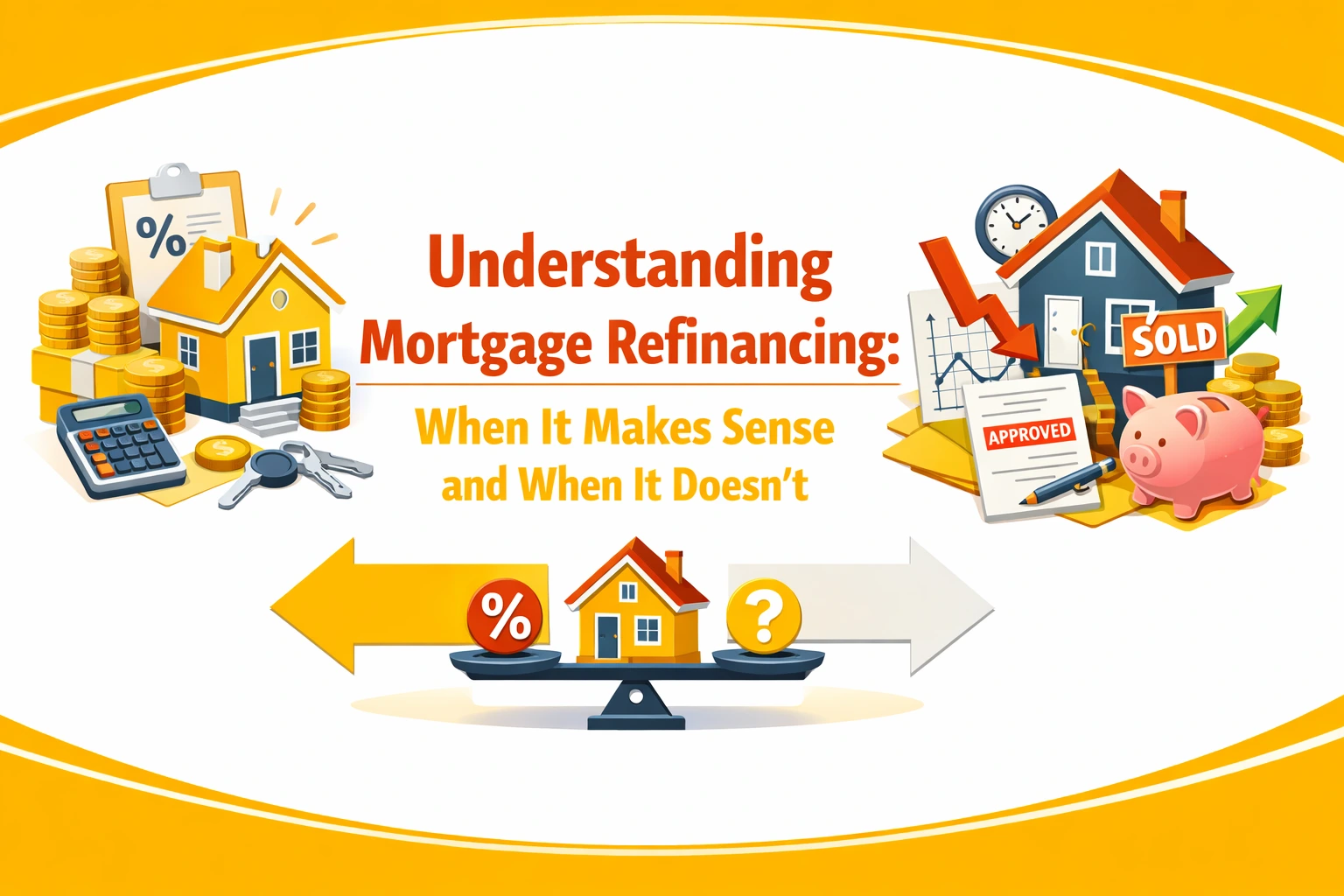
Understanding Mortgage Refinancing: When It Makes Sense and When It Doesn’t

Posted by Ahmad Raza on March 25, 2026
0 Comments


In the world of personal finance, few decisions carry as much weight as mortgage refinancing. The concept is simple — replacing your existing home loan with a new one on better terms. However, the decision itself is highly personal and depends on market conditions, your financial situation, and long-term goals.

Refinancing can lower monthly payments, reduce your loan term, and improve overall financial flexibility. But it only works in your favour when done strategically and at the right time.

When Refinancing Works Best:

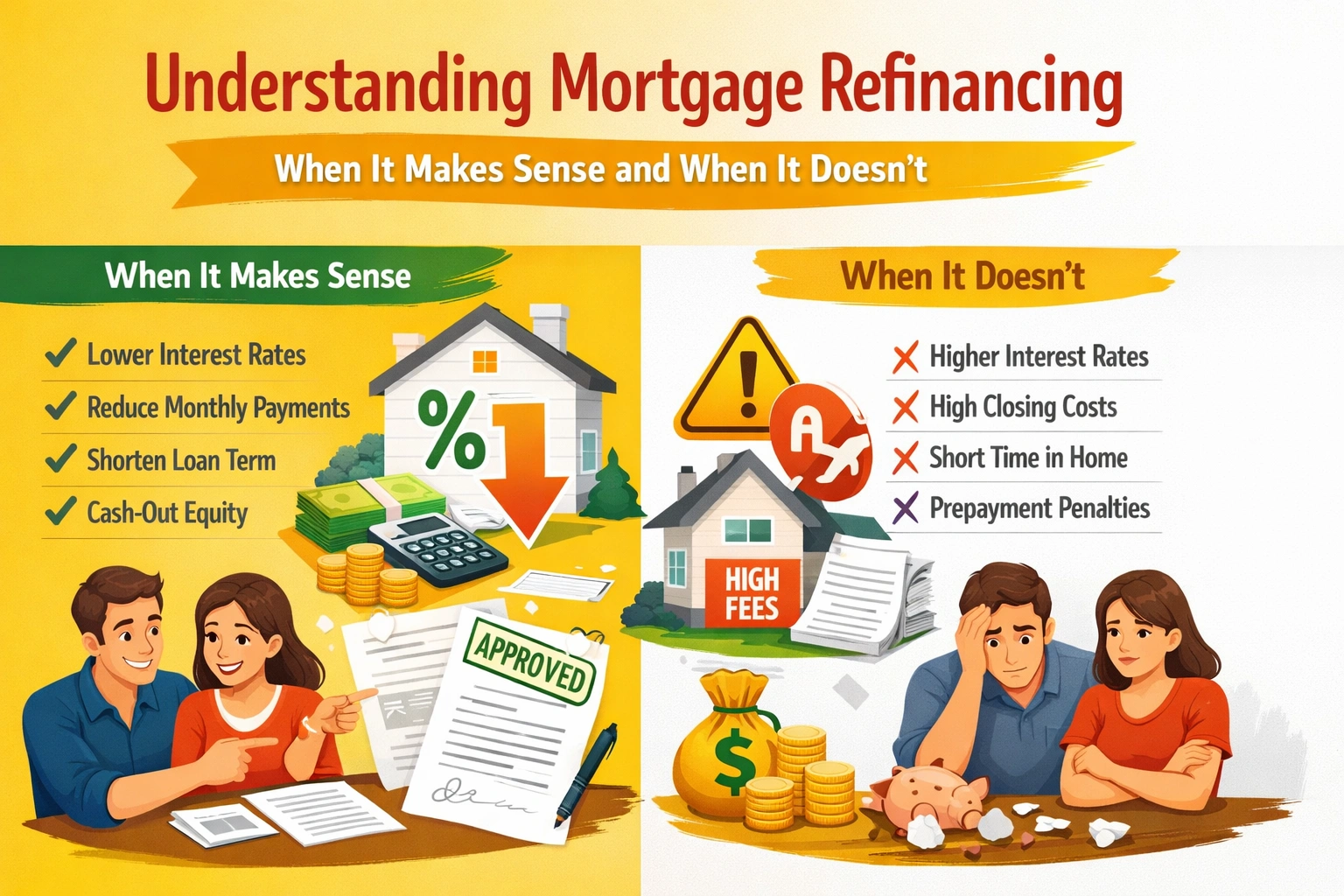
  • You secure at least 0.75%–1% lower interest rate
  • You switch from government-backed loans (FHA/VA) to conventional loans
  • You eliminate Private Mortgage Insurance (PMI)
  • You access equity for renovations or debt consolidation

When Refinancing Makes Sense

Lower Interest Rate

The most common reason homeowners refinance is to reduce interest rates. Even a small reduction of 0.75%–1% can save thousands over the life of the loan, especially if you plan to stay long enough to recover closing costs.

Switching Loan Types

Refinancing allows you to move between loan structures. For example, VA loans offer excellent benefits for veterans, including lower rates and minimal paperwork through IRRRL programs. Similarly, FHA refinancing can help transition into more flexible conventional loans with lower insurance costs.

Eliminating PMI

If your home equity reaches 20%, refinancing into a conventional loan can remove PMI payments. This reduces your monthly financial burden significantly.

Accessing Equity & Cash-Out

If your property value has increased, refinancing allows you to unlock that equity. A cash-out refinance lets you take a larger loan and receive the difference in cash, which can be used for:

  • Home renovations
  • Debt consolidation
  • Business investment
  • Major expenses

When Refinancing Doesn’t Make Sense

High Break-Even Point

Refinancing comes with costs, typically 2%–5% of the loan amount. If it takes too long to recover these costs through monthly savings, it may not be worth it — especially if you plan to move soon.

Resetting Your Mortgage Term

If you’ve already spent years paying off your mortgage, starting over with a new 30-year loan may increase total interest paid. In such cases, a shorter-term refinance may be a better option.

Weakened Financial Profile

If your income has decreased or your debt has increased, lenders may offer less favourable terms. This could result in higher rates instead of savings.

Staying with the Same Lender Without Comparing

While staying with your current lender may seem easier, it may not offer the best deal. Shopping around ensures you get competitive rates and better terms.

Costs of Refinancing

Cost Type Estimated Range
Closing Costs 2%–5% of loan value
Application Fees £0–£1,500
Valuation Fees £0–£500
Legal Fees £300–£800

Quick Decision Checklist

  • Will you stay in the property long enough to recover costs?
  • Are interest rates significantly lower?
  • Has your financial situation improved?
  • Are you switching to a better loan structure?

Final Thoughts

Mortgage refinancing can be a powerful financial tool when used correctly. It helps reduce costs, unlock home equity, and improve financial stability. However, it’s not a one-size-fits-all solution.

The key is to compare lenders, calculate your break-even point, and align the decision with your long-term financial goals.

A small rate change today could save you thousands tomorrow, make your move wisely.

FAQs

What is mortgage refinancing?

It is the process of replacing your current mortgage with a new one, usually to get better rates, terms, or access equity.

What are the two main types of refinance?

Rate-and-term refinance (lower rate or duration) and cash-out refinance (access home equity as cash).

Can refinancing affect your credit?

Yes, temporarily. A credit check may cause a small short-term dip.

How long does refinancing take?

Typically 30–45 days, though streamlined programs may be faster.

Do I qualify for refinancing?

Lenders usually require a credit score above 620, stable income, and sufficient home equity.

What should I avoid during refinancing?

Avoid taking new loans, opening credit cards, or making large purchases during the process.

Compare Listings