
How to Manage Rental Property – Top 5 Steps for UK Landlords
Does managing your rental property feel like constantly putting out fires? You are not alone. Most landlords react to problems rather than prevent them, which burns time, money, and patience.
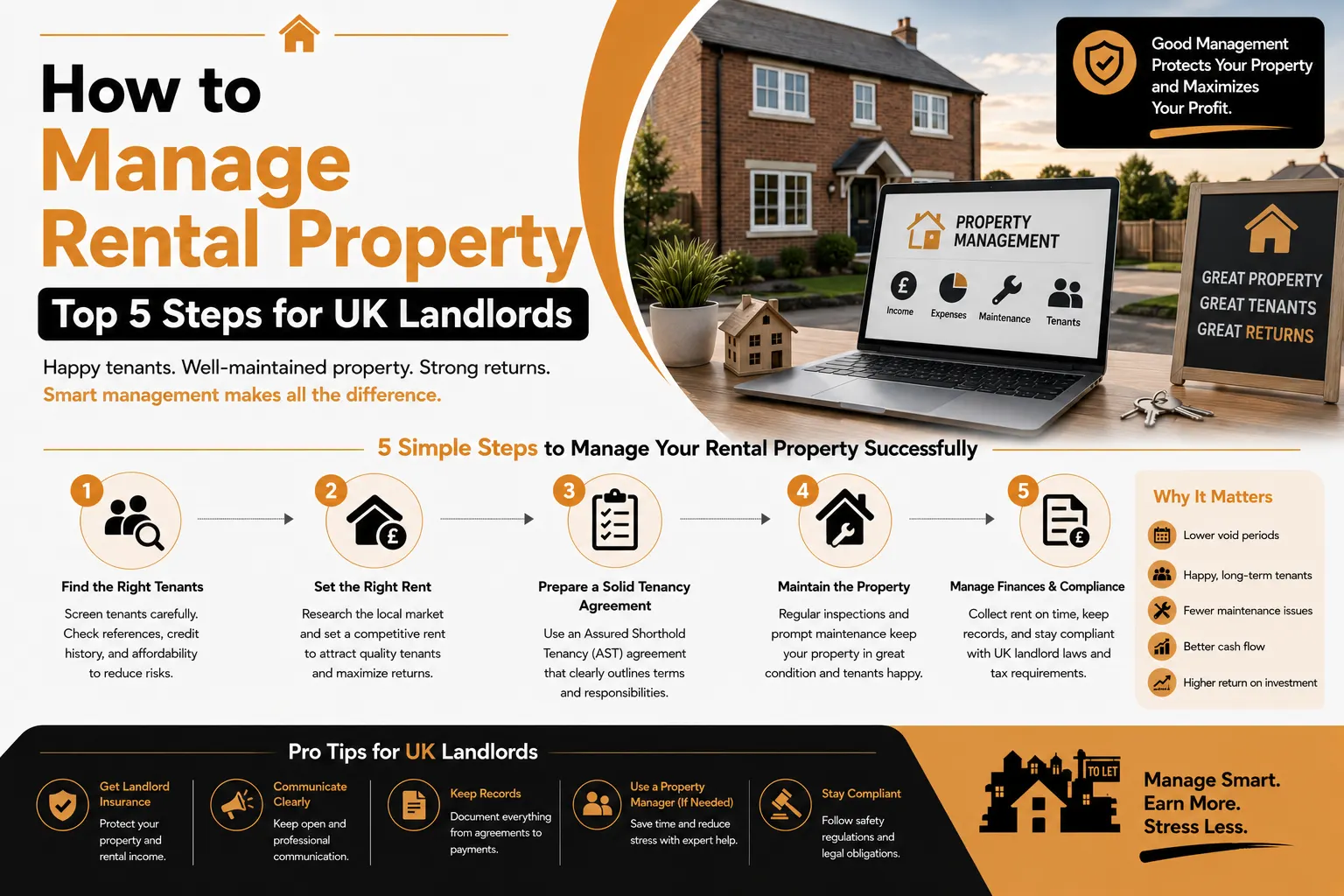
The better way is proactive rental property management: set up systems before issues appear, inspect before leaks happen, and communicate before disputes grow. This guide walks you through five steps to manage rental property smoothly, save yourself from costly emergencies, and keep good tenants for years.
Step 1: Set Up Proactive Rent Collection
Getting your rent collection process right from day one saves endless headaches later. Set up software like Arthur, or let tenants pay by standing order. Write a clear late fee policy into every tenancy agreement and enforce it consistently from month one.
What works for most landlords:
- Rent must be paid on the same date each month.
- Three-day grace period, then automatic late fee.
- Payment reminders are sent five days before the due date.
Automated rental home management means you stop chasing money and start focusing on property care.
Step 2: Build a Reliable Contractor Network
Good short-term rental management requires immediate response times, which means having trusted tradespeople on speed dial before an emergency hits. Finding a plumber at 10 PM on a bank holiday is every landlord’s nightmare. You need to build your contractor network to run your business successfully. Collect contact details for an emergency plumber, electrician, locksmith, and general handyman who covers your property’s area.
How to find reliable tradespeople:
- Ask other landlords for recommendations.
- Check Checkatrade or Which? Trusted Traders.
- Test them with a small paid job first.
Many rental property management companies fail because they lack this network. Do not be one of them.
Step 3: Schedule Regular Property Inspections
Professional vacation rental property management demands frequent checks, but even standard rentals need regular eyes on them. Waiting for a tenant to move out before inspecting is too late by years. Walk through each room, test smoke alarms and appliances, and look for early signs of damp, leaks, or damage.
What to document at every inspection:
- Dated photos of each room
- Signed report by you and the tenant
- Notes on any maintenance needed
Searching for “rental property management near me” often leads to firms that prioritise inspections. Make it your priority too.
Step 4: Master Tenant Communication
A professional rental management company‘s style of communication builds trust and keeps tenants longer. The best tenants leave when they feel ignored. Respond to every message within 24 hours, even if just to say you are looking into it. Put all important conversations in writing via email or text, not just phone calls or face-to-face chats.
Clear communication rules to follow:
- Acknowledge maintenance requests within one working day
- Written confirmation of appointments and access
- Clear boundaries for out-of-hours emergencies only
Poor communication increases your property management costs through tenant turnover and vacancy periods.
Step 5: Know Your Legal Obligations for Rental Property Management
Effective rental property management starts with knowing what you legally must do. Ignorance of the law is expensive for landlords. Deposit protection, gas safety certificates, EPC ratings, and Right to Rent checks are not optional. Recent rules also require smoke alarms on every floor and carbon monoxide detectors in high-risk rooms.
- Non-negotiable legal requirements in the UK:
- Deposit registered in the approved scheme within 30 days
- Gas safety check every 12 months
- EPC rating E or higher (moving towards C by 2030)
Solid rental property management means compliance is never an afterthought.
Bonus: When to Hand Over to a Rental Management Company
Some landlords reach a point where DIY management no longer makes sense. If you have multiple properties, live away from them, or simply if you want more free time for yourself, DIY is not a good choice. That is when professional help becomes worth the cost.
Signs you need professional help:
- You have more than five properties.
- Maintenance calls interrupt your day job.
- You dread hearing from your tenant.
Short-term rental management and vacation rental property management are best left to specialists who handle daily guest communication, cleaning between stays, and dynamic pricing.
Search for trusted local property management firms and interview at least three. Compare fees and contract terms. The right partner turns a stressful side business into a hands-off income stream.
Conclusion
To manage rental property well, stop reacting and start preventing. Automate rent collection, build a contractor network, inspect regularly, communicate clearly, and know your legal duties. When the workload exceeds your time, hand it over to a trusted rental management company. That is where smart landlords make the real difference.
FAQs
After how much time should I inspect my rental property?
Every three to six months is the standard for rental property management. New tenants get inspected sooner. Long-term trusted tenants can go longer between visits.
What is the easiest way to collect rent on time?
Automated rent collection through standing order works best. Tenants set up a monthly transfer that happens automatically. No chasing, no excuses.
How do I find reliable tradespeople for my rental property?
Ask other landlords for recommendations first. Check Checkatrade or Which? Trusted Traders for verified reviews. Test a new tradesperson with a small paid job first.
What legal documents must every landlord have?
Every landlord needs a gas safety certificate, an EPC, and deposit protection paperwork. Rental home management also requires written tenancy agreements. Keep copies for at least six years.
What is the average cost of hiring a rental management company in the UK?
Most rental property management companies charge 8% to 12% of the monthly rent. Full service includes tenant finding, rent collection, and maintenance. Some charge extra for evictions.
Should I use short-term rental management for my property?
Only if your property is in a high-demand tourist area. Short-term rental management needs daily guest communication and cleaning between stays. Most standard properties earn more from long-term tenants.
How do I find rental property management near me?
Search “rental property management near me” and read the client feedback. Ask local landlord groups on Facebook for recommendations. Interview three firms before deciding.
What is the difference between a letting agent and a rental management company?
A letting agent finds tenants and takes a fee. A rental management company handles everything after move-in. Most landlords need the second option.
How can I reduce property management costs without losing quality?
Handle tenant communication and rent collection yourself. Outsource only maintenance and legal compliance. This hybrid approach lowers property management costs while keeping standards high.
Is vacation rental property management worth the extra fees?
Yes, for tourist hotspots like Cornwall or the Lake District. Vacation rental property management handles guest screening, cleaning, and pricing changes. The higher income often covers the management fee.