

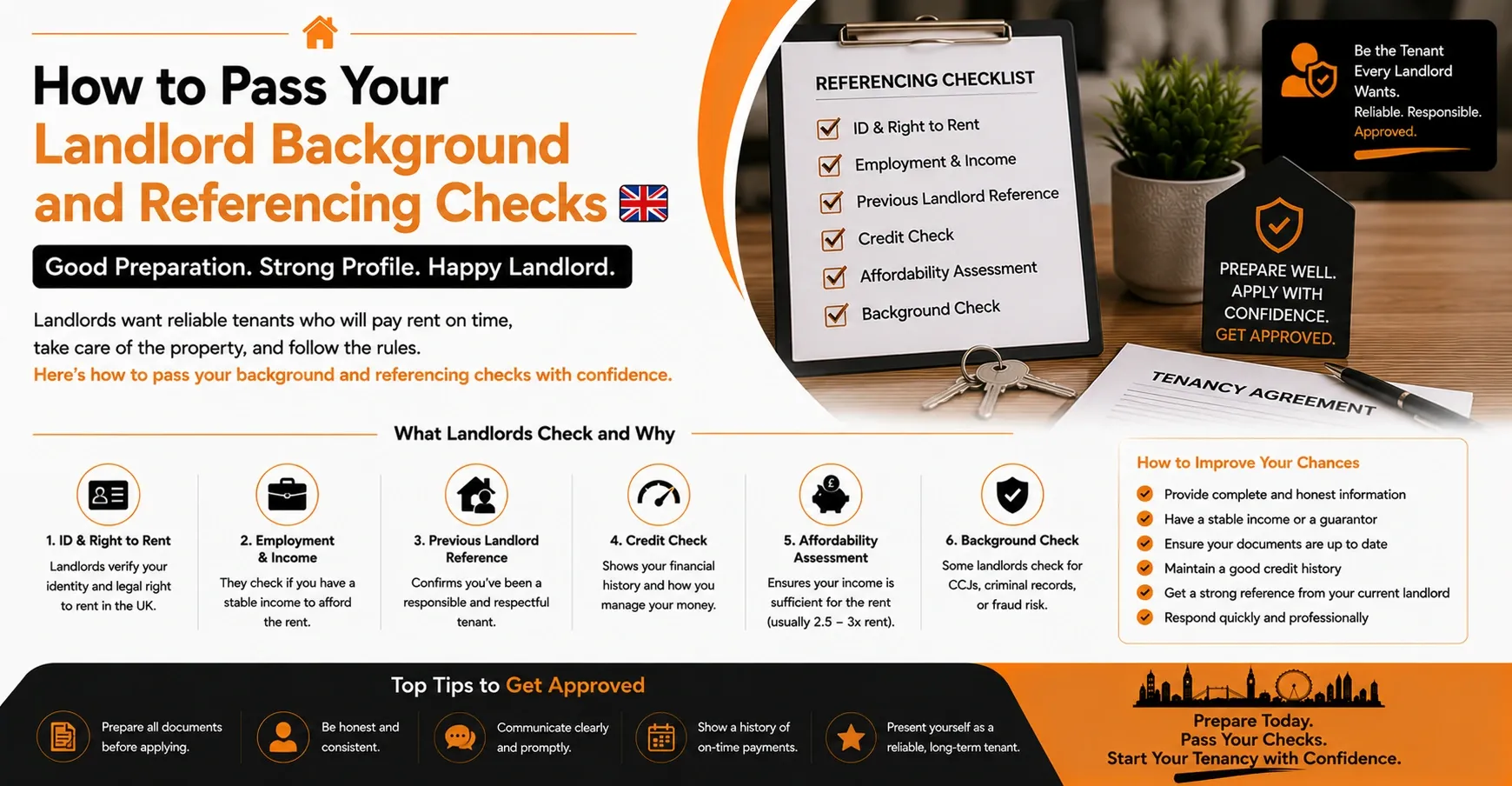
How to Pass Your Landlord Background and Referencing Checks
A break clause can give you a way to leave a rented home before the full term ends. But it only works if you follow the wording properly. This guide explains how to check your tenancy agreement, confirm your notice date, deal with joint tenants, and protect your deposit. It also explains when current England notice rules may matter, especially if your tenancy is now rolling. By the end, you should know how to end tenancy early without creating extra rent problems.
What a Break Clause Means
A break clause is a part of a rental contract that lets the tenancy end before the original end date. It is most common in a fixed-term tenancy, where the tenant and landlord agreed to rent the property for a set time.
The wording can be different in every contract. Some clauses only work after six months, while others need one or two months’ written notice. If you miss the date or send notice the wrong way, your early tenancy termination may not be valid.
Check Your Tenancy Agreement
Read your tenancy agreement slowly before you send any notice. Look for words like notice, ending the tenancy, early exit or early termination.
For many assured periodic tenancies in England, tenants can now end the tenancy by giving 2 months’ notice in writing, unless a shorter notice is agreed. This matters if your old fixed-term tenancy has changed into a rolling tenancy under current rules.
Notice Period and Leaving Date
Your tenant notice period is the time between the day you give notice and the day your tenancy ends. If the contract asks for two months, leaving after two weeks can still leave you owing rent.
Also check when the notice must end. Current official guidance says notice for an assured periodic tenancy after 1 May 2026 should end on the rent due date or the day before it. You also need to keep paying rent during the notice period.
How to Send Notice Properly
If you want to end tenancy early, send a clear written notice. Include your full name, property address, date, leaving date, and a short line saying you are using the early-exit wording in your contract.
Do not rely only on a phone call. If your contract asks for post, keep proof of posting. If email is allowed, ask for written confirmation that your notice has been received.
Quick Checklist Before Sending Notice
| What to Check | Why It Matters |
| Earliest leave date | You may not be able to leave immediately. |
| Notice length | Giving too little notice may make it invalid. |
| Delivery method | Some tenancy agreements require written notice. |
| Joint tenants | All tenants may need to agree before ending the tenancy. |
| Rent balance | Outstanding rent could affect your deposit refund. |
| Final condition | Photos provide evidence if there is a deposit dispute. |
This checklist can stop simple mistakes. It also helps you leave in a clean and organised way.
Joint Tenancies, Rent and Deposit
Joint tenancies need care because one person may not be able to end the whole agreement alone. If all tenants signed one contract, speak to everyone first and keep written proof of what is agreed.
Your deposit should not be lost just because you used a valid early-exit clause. Still, unpaid rent, damage, missing keys, or poor cleaning can lead to deductions. Take photos before leaving and ask for a final rent statement.
Final Verdict
A break clause is useful, but it is not something to rush. Check the wording, the tenant notice period, the leaving date, and the way notice must be sent.
Good planning makes early tenancy termination smoother and helps avoid rent or deposit disputes. If the wording is unclear, get proper housing or legal advice before moving out.
FAQs
1. Can I leave before my tenancy ends?
Yes, you may be able to leave early if your contract allows it. You must follow the exact wording. Moving out without valid notice can leave you owing rent.
2. Where do I find the early-exit wording?
Check your rental contract first. It may be under notice, ending the tenancy, or early termination. Read the full section, not just the heading.
3. How much notice do I need?
It depends on your contract and tenancy type. Some agreements ask for one or two months. Always check the dates before sending notice.
4. Can I give notice by email?
You can use email if your contract allows it or your landlord accepts it. If not, written post may be required. Keep proof of anything you send.
5. Do joint tenants all need to agree?
Often, yes. Joint tenants may all need to agree before the tenancy can end early. Check the contract and speak to everyone first.
6. Can my landlord reject my notice?
They can question it if the date, method, or notice length is wrong. Ask for the reason in writing. Then compare it with your contract.
7. Will I lose my deposit?
Not if your notice is valid and the property is left properly. Deductions can still happen for rent arrears or damage. Take photos before you leave.
8. What if there is no early-exit wording?
You may need written agreement from the landlord to leave early. This is often called ending by agreement. Do not rely on a verbal promise.
9. Should I clean before moving out?
Yes, leave the home clean and tidy. Check the inventory if you have one. This helps avoid deposit arguments later.
10. When should I get advice?
Get advice if the wording is unclear. Also get help if your landlord refuses your notice. Early support can prevent extra rent and stress.