
How to Report Emergency Repair Issues to Your Council
You may need to report emergency repairs to council when a serious home problem is not being fixed. Some issues can affect safety, health, heating, water, or security. You should usually tell your landlord first, unless there is real danger. This guide explains what counts as urgent, what proof to keep, and how to make a clear report. It also explains urgent housing repairs, council checks, and mistakes to avoid.
What Counts as an Emergency Repair?
Council emergency repairs are usually serious problems that cannot wait. They may affect safety, health, or basic use of the home.
Common examples include no heating, no hot water, flooding, exposed wiring, broken locks, unsafe stairs, blocked toilets, or severe mould. A home may also become an unsafe rental property if the problem poses a risk to people. Official guidance states that landlords are usually responsible for repairs to heating, hot water, drains, electrical wiring, and the home’s structure.
Tell Your Landlord First
In most cases, tell your landlord or agent first. Send a text or email, so you have a record.
Landlord repair responsibilities include keeping key parts of the home safe and working. This can include heating, hot water, wiring, drains, and outside structure. Tenants should also allow access for repairs, with notice unless it is an emergency.
When Should You Contact the Council?
Contact the council when the repair is serious and not fixed. This matters more if children, older people, or disabled tenants live there.
The council may look at urgent housing repairs when the landlord delays or ignores the issue. If the home still feels like an unsafe rental property, the council may inspect it. Official guidance says councils can act when serious hazards are found.
What Evidence Should You Keep?
Good proof helps your case move faster. It also shows the problem clearly.
Keep these details ready:
- Clear photos and short videos
- Dates and times
- Messages sent to the landlord
- Replies from the landlord
- Repair request numbers
- Medical notes, if health is affected
- Witness details
- Your full address
- Landlord or agent contact details
Do not rely only on phone calls. If you call, write down the date, time, and what was said.
How to Report the Problem Clearly
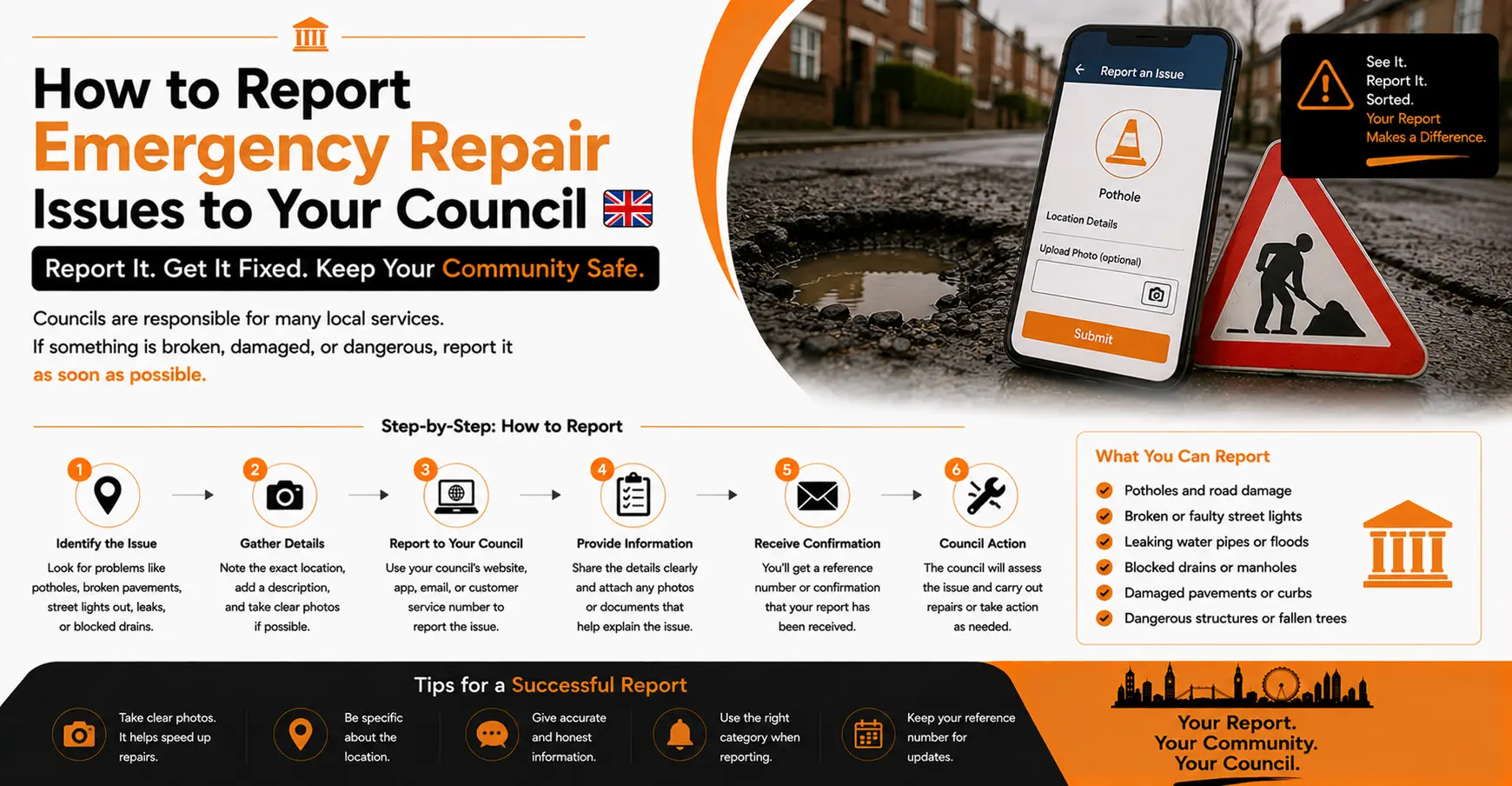
To report emergency repairs to council, contact your local council’s housing team. It may be called private housing, housing standards, or environmental health.
Your housing repair complaint should be short and clear. Say what the problem is, when it started, and how it affects you. Add photos, videos, and messages. Ask what will happen next and when you may get a reply.
What the Council May Do Next
The council may first ask for more details. They may then contact your landlord, inspect the home, or explain your next steps.
Some council emergency repairs cases can lead to formal action. Councils can inspect private rented homes for hazards and may require landlords to fix serious issues. Landlords must also meet their landlord repair responsibilities where the law applies.
Simple Reporting Template
Use this short message if you are unsure what to write. Keep it calm, clear, and factual.
“Hello, I need to Report emergency repairs to council at [address]. The problem is [issue], and it started on 2026. I told my landlord on 2026, but it has not been fixed. I am worried because [health or safety risk]. I can send photos, videos, and messages as proof.”
This keeps your housing repair complaint easy to understand. It also gives the council the main facts quickly.
Mistakes to Avoid
Before you report emergency repairs to council, make sure your proof is clear. Weak photos, missing dates, and unclear messages can slow things down.
Avoid these mistakes:
- Waiting too long
- Keeping no written proof
- Sending blurry photos
- Not telling the landlord first
- Ignoring safety risks
- Stopping rent without advice
- Missing key dates
Final Verdict
If you need to report emergency repairs to council, act early and stay organised. Serious repair issues should not be ignored when safety is at risk.
Tell your landlord first where safe, then contact the council if nothing improves. Keep photos, messages, dates, and repair details together. A clear report can help the council understand the risk faster.
FAQs
1. What repairs can I report to the council as an emergency?
You can report serious repairs that affect safety, health, heating, water, or security. Examples include flooding, exposed wires, no heating, broken locks, or blocked toilets. The issue should be more serious than a small fault or minor wear.
2. Should I contact my landlord before reporting repairs to the council?
Yes, you should usually contact your landlord first. Send the repair request in writing, so you have proof. If there is danger, act quickly and keep records.
3. When should I report a repair problem to the council?
You should contact the council if the issue is serious and ignored. You should also report it if the repair keeps being delayed. Do this sooner if someone’s health or safety is at risk.
4. What evidence do I need for a council repair report?
You should keep photos, videos, messages, and dates. Repair request numbers and landlord replies can also help. Clear proof makes the problem easier to check.
5. Can the council inspect my rented home for repairs?
Yes, the council may inspect a rented home. They can check whether the problem affects health or safety. They may then decide what action is needed.
6. Can I report no heating or no hot water to the council?
Yes, no heating or hot water can be serious. This is especially true in cold weather or with vulnerable people at home. Tell your landlord first, then contact the council if nothing happens.
7. Can I report mould or damp to the council?
Yes, you can report serious damp or mould. Take photos and explain how long it has been there. Also show any messages sent to your landlord.
8. Can I stop paying rent because repairs are not done?
You should not stop paying rent without proper advice. Stopping rent can create arrears and more problems. Keep paying while you report the repair issue properly.
9. What if my landlord ignores my repair request?
Send a polite follow-up message and keep proof. If the issue is serious, contact the council with your evidence. Explain how long the repair has been ignored.
10. How quickly will the council respond to emergency repairs?
Response time depends on the risk level. Danger may be treated faster than minor repairs. Clear proof can help the council understand the urgency.