

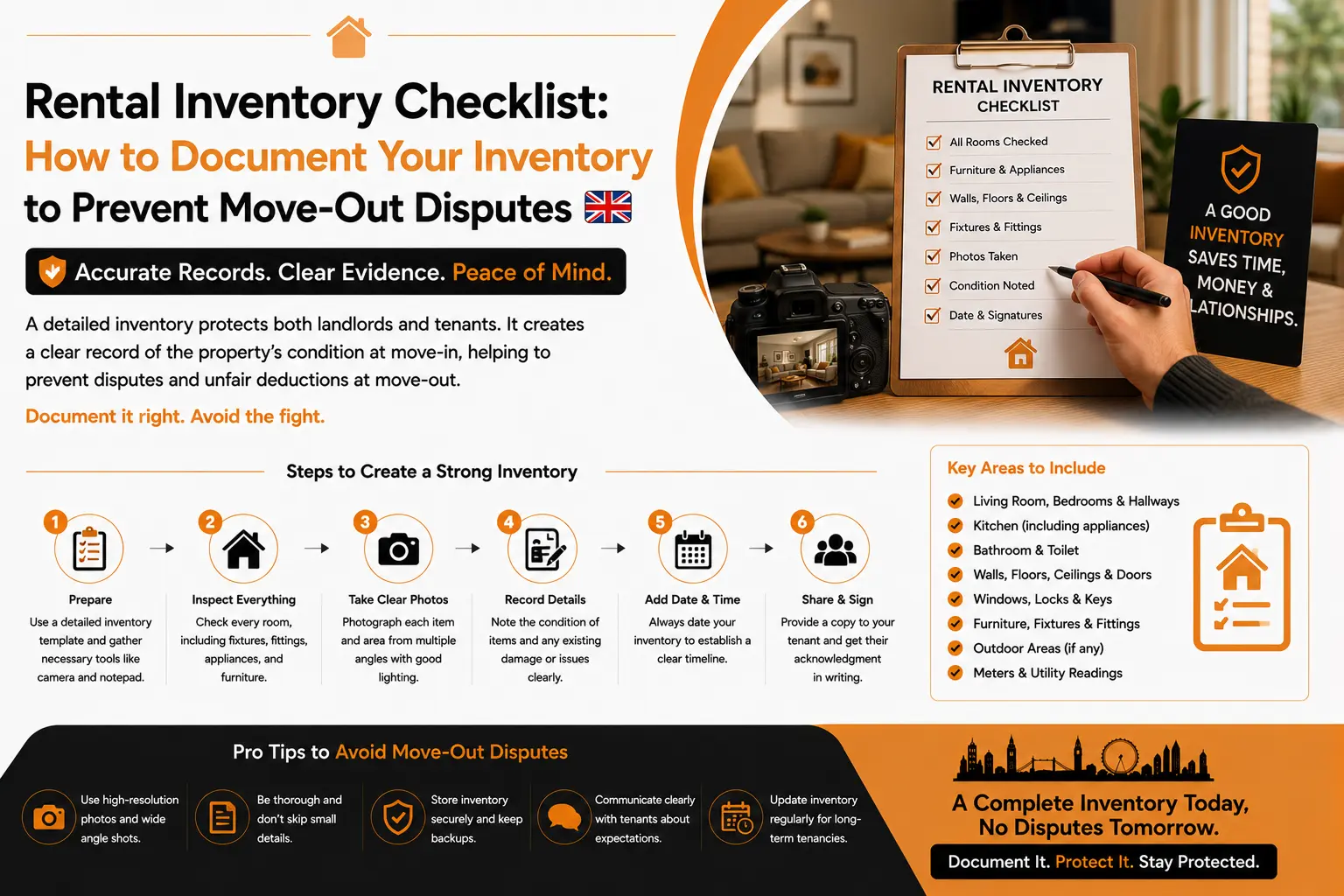
Rental Inventory Checklist: How to Document Your Inventory to Prevent Move-Out Disputes
A rental inventory checklist helps stop arguments at move-out. It records the property condition before the tenant moves in. This includes rooms, furniture, keys, meters, cleaning, and photos. Without clear records, both sides may remember things differently. This guide shows how to build a clear inventory, compare it later, and reduce deposit disputes.
Start Before the Tenant Moves In
The best time to make a check-in inventory is before keys are handed over. The property should be clean, safe, and ready to record. Do not wait until the tenant has already moved furniture and boxes inside.
Walk through each room slowly. Record what you can see, not what you expected to see. If there is a mark, stain, crack, dent, or missing item, write it down. A clear start record makes the final check much easier.
What Should Be Included?
A rental inventory checklist should cover every room and supplied item. It should also include fixed parts of the home, not just furniture. That means walls, ceilings, floors, doors, windows, appliances, keys, and meters.
| Area | What to Record |
| Walls and ceilings | Record any marks, cracks, stains, scuffs, or holes. |
| Floors and carpets | Note wear, burns, stains, dents, or other damage. |
| Kitchen | Check appliances, cupboards, worktops, and fixtures. |
| Bathroom | Inspect tiles, taps, sealant, mould, and sanitary fittings. |
| Furniture | Record any marks, damage, wear, or missing parts. |
| Keys and meters | Confirm the key count and record all meter readings. |
A good record should be easy to compare later. It should not leave people guessing.
Write Clear Condition Notes
A tenant inventory report should use exact words. Vague words like “fine” or “okay” can cause problems. They do not explain what the room really looked like.
Write what you see in simple detail. For example, “small chip on right door edge” is better than “door damaged”. “Light stain near sofa leg” is clearer than “carpet worn”. Small details can matter later.
Take Photos That Actually Help
Good property condition photos should show location and detail. Take wide photos of the full room first. Then take close-up photos of marks, stains, cracks, or damage.
Use good light where possible. Avoid blurry or dark images. Name photos by room, such as “kitchen worktop” or “bedroom wall”. This makes the file easier to follow during a dispute.
Record Cleaning as a Separate Item
Cleaning causes many move-out arguments. That is why it should be recorded clearly at the start. Do not just write “clean” for the whole property.
Record the oven, hob, fridge, bathroom, carpets, windows, cupboards, and floors. Say if something is dusty, stained, greasy, or professionally cleaned. This gives both sides a fair standard to compare at the end.
Do Not Forget Small Details
Small items often cause big arguments. Keys, fobs, remote controls, bins, smoke alarms, blinds, light bulbs, garden tools, and appliance trays should be recorded.
Also record meter readings on move-in day. Take photos of the meters if possible. This helps avoid confusion over energy use, water use, or missing keys. A simple note can save time later.
Update the Inventory During the Tenancy
The inventory should not stay frozen if things change. If a repair is done, record it. If furniture is replaced, update the file.
This keeps the story clear. For example, a broken blind may be replaced during the tenancy. A leak may damage flooring, then get repaired. Keep emails, invoices, and photos together, so the condition record stays fair.
Compare Like-for-Like at Move-Out
A move-out inspection should compare the property against the original record. Use the same rooms, notes, and photo angles where possible. This helps everyone see what has changed.
Official landlord guidance says an end-of-tenancy inspection should ideally happen with the tenant present, using the agreed inventory from the start. It also says photos can help as evidence.
Understand Fair Wear and Tear
Fair wear and tear means normal use over time. A carpet may look more worn after two years. Paint may lose its freshness. Small signs of normal living are not always damage.
Damage is different. A burn mark, broken door, large stain, or missing item may go beyond normal use. The key is balance. The age, quality, length of tenancy, and number of occupiers can all matter.
Evidence That Helps in Deposit Disputes
Strong deposit dispute evidence helps if both sides disagree. Useful records include the signed inventory, dated photos, emails, repair invoices, cleaning receipts, move-in notes, and final notes.
GOV.UK says deposit protection schemes can offer a free dispute service if a tenant and landlord disagree over the returned deposit. Both sides may be asked to provide evidence. Good records make that evidence easier to understand.
Common Inventory Mistakes to Avoid
Avoid these common mistakes:
- Using vague words like “good”
- Taking photos with no room labels
- Missing keys or meter readings
- Not recording cleaning standards
- Ignoring tenant comments
- Waiting until move-out to check condition
These errors make disputes harder. A clear record should tell the full property story.
Final Verdict
A rental inventory checklist protects both landlords and tenants. It should show the property clearly from move-in to move-out. Good notes, clear photos, cleaning records, and updates reduce confusion. The aim is not to blame anyone. The aim is to prove the real condition fairly.
FAQs
1. What should a rental inventory checklist include?
A rental inventory checklist should include every room and supplied item. It should record walls, floors, furniture, appliances, keys, meters, and cleaning. Clear notes and photos make the record stronger.
2. How do I make a check-in inventory for a rental property?
Start before the tenant moves in. Walk through each room and write down the real condition. Add photos, meter readings, key counts, and cleaning notes.
3. Why is a tenant inventory report important?
A tenant inventory report shows the property condition at move-in. It helps both sides compare changes at move-out. It can also support fair deposit decisions.
4. What are the best property condition photos to take?
Take wide photos of each full room first. Then take close-up photos of marks, stains, or damage. Label photos by room, item, and date where possible.
5. What should I check during a move-out inspection?
Check each room against the original inventory. Look at cleaning, damage, missing items, keys, and meter readings. Use the same notes and photos for a fair comparison.
6. What does fair wear and tear mean in a rental property?
Fair wear and tear means normal use over time. It can include light carpet wear or faded paint. It does not usually include careless damage or missing items.
7. What counts as deposit dispute evidence?
Deposit dispute evidence can include photos, reports, emails, and receipts. It can also include signed inventory notes and final inspection records. The stronger the proof, the easier the issue is to review.
8. Should tenants sign the inventory report?
Yes, tenants should check and sign the inventory if possible. They should also add comments if something is missing or wrong. This helps avoid arguments later.
9. How can landlords avoid move-out disputes?
Landlords can avoid disputes by keeping clear records. They should use dated photos, fair notes, and proper cleaning records. They should also compare move-in and move-out conditions carefully.
10. Why do inventory disputes happen at the end of tenancy?
Inventory disputes happen when records are weak or unclear. They also happen when photos are missing or condition notes are vague. A detailed inventory makes both sides safer.