

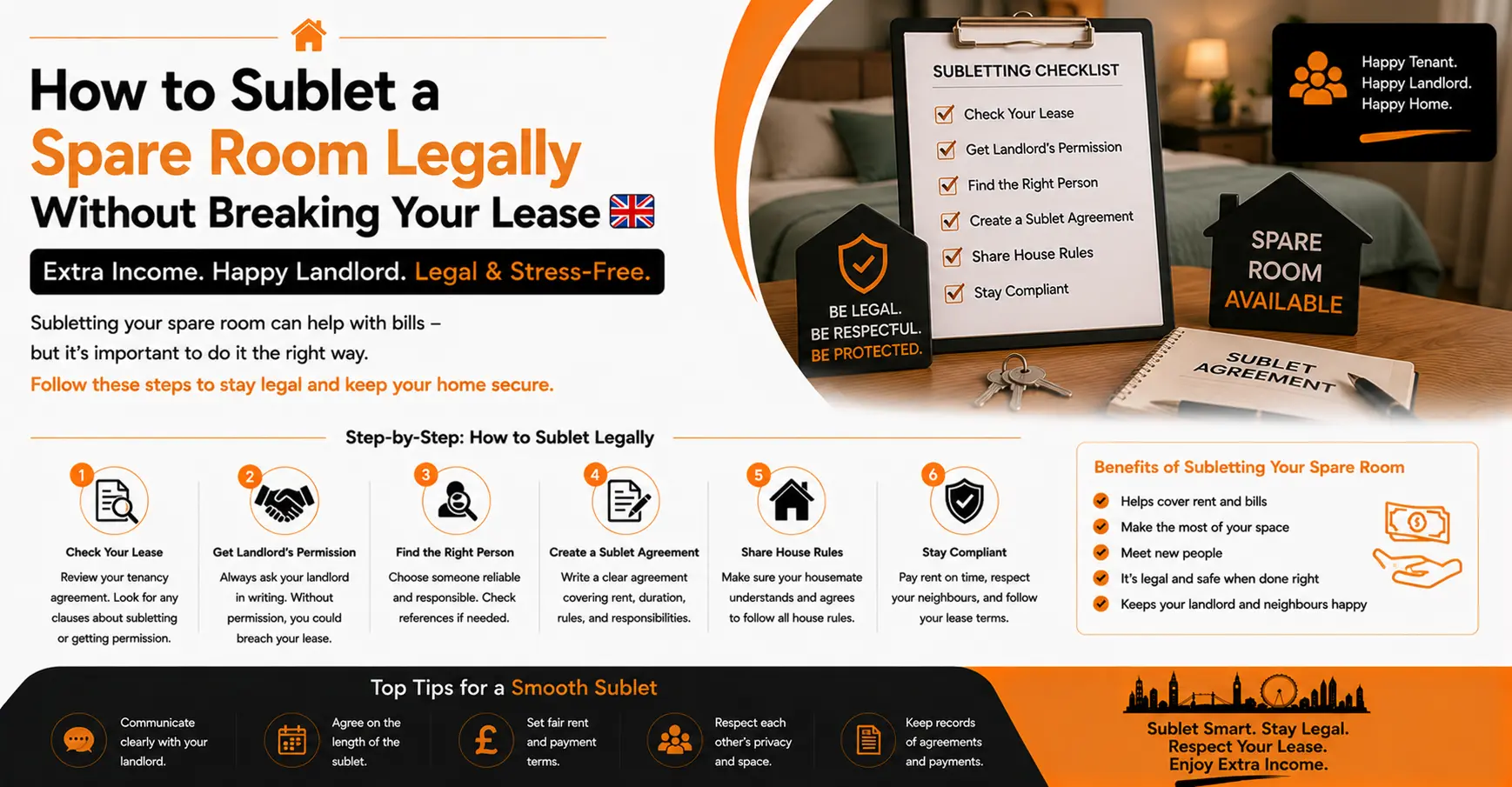
How to Sublet a Spare Room Legally Without Breaking Your Lease
To sublet a spare room legally, start with your lease, not an advert. Renting a spare room can help with bills, but it can also break your tenancy if done wrong. You need to check permission, write clear terms, handle checks, and keep records. You should also understand rent, bills, tax, safety, and house rules. This guide explains the safe order to follow before someone moves in.
Step 1: Check Your Lease First
Your tenancy agreement should be your first point of reference. Look for a tenancy agreement subletting clause before you speak to anyone about the room. Search for words like subletting, lodgers, occupiers, guests, assignment, and written consent.
If the agreement says no, do not ignore it. If the wording is unclear, ask your landlord or agent. A short email can prevent a serious problem later. Your lease may allow it, ban it, or allow it only with consent.
Step 2: Ask for Written Permission
You should always ask the landlord for permission to sublet before accepting payment. Oral approval is difficult to prove. Written permission gives you a clear record.
Explain that you will still live in the property. Say which room will be used, how many people will move in, and the likely start date. You can also mention rent, bills, and house rules. Ask the landlord to confirm approval by email.
Step 3: Understand the Room Arrangement
Many tenants call this spare room subletting, but the setup matters. The risk is lower when you stay in the home and share spaces. It can be higher if the other person gets separate control of part of the property.
| Arrangement | Simple Meaning | Main Point |
| Shared room setup | They live in your home and share living spaces. | Set clear house rules from the beginning. |
| Separate room control | They have greater privacy and control over their space. | Make sure you have the appropriate permission or agreement. |
GOV.UK says you are a resident landlord if you let out part of your only or main home. It also advises asking potential tenants or lodgers for references before signing any agreement.
Step 4: Use a Clear Room Agreement
A lodger agreement helps set the rules from day one. It should say the rent, deposit, notice period, room use, bills, guests, keys, cleaning, and shared areas.
Do not rely on friendly chats. Small issues can turn into arguments later. A written agreement helps both people understand the arrangement. It should also match the permission given by your landlord.
Step 5: Do the Right Checks
In England, a Right to Rent check may apply before an adult moves in. GOV.UK says landlords must check that a tenant or lodger can legally rent residential property in England before the tenancy starts.
Do not guess this part. Check the current process before handing over keys. Keep copies or records as required. If you live in Scotland, Wales, or Northern Ireland, check the local rules because they can differ.
Step 6: Be Clear About Rent, Bills, and Tax
Set the rent and bills in writing. Say whether rent includes gas, electricity, water, council tax, internet, or cleaning. This avoids awkward disputes later.
The Rent a Room Scheme may help if you let furnished space in your only or main home. GOV.UK says the tax-free threshold is £7,500 a year, or £3,750 if you share the income. It also says the scheme can apply whether or not you own your home.
Step 7: Keep Your Tenancy Safe
Once someone moves in, your main tenancy still matters. You may still be responsible for damage, noise, rent, and behaviour in the property.
Avoid overcrowding and keep shared areas safe. Report repairs as normal. Keep proof of rent payments and messages. A simple record can help if the landlord asks questions later.
Mistakes That Can Break Your Lease
Many problems start because tenants move too fast. Avoid these common mistakes:
- Advertising before checking the lease
- Relying on verbal permission
- Taking cash with no record
- Using unclear room terms
- Skipping checks
- Hiding the occupier from the landlord
These mistakes can pose a risk to your tenancy. Slow steps are safer than rushed decisions.
Final Verdict
To sublet a spare room legally, follow the right order. Check your lease, get written consent, use clear terms, complete checks, and record payments. A spare room can help with costs, but only if the arrangement protects your tenancy. Do not start with money or adverts. Start with permission and proof.
FAQs
1. How do I sublet a spare room legally in the UK?
Start by checking your tenancy agreement. Then ask your landlord for written consent before anyone moves in. Use clear room terms and keep proof of all payments.
2. Can I rent out a spare room if I am a tenant?
You may be able to rent out a spare room as a tenant. It depends on your tenancy agreement and landlord approval. You should not assume it is allowed.
3. Do I need landlord permission to sublet a spare room?
Yes, you should get written permission first. This helps prove that your landlord agreed. It is also useful if there are any conflicts later on.
4. What is a tenancy agreement subletting clause?
It is the part of your agreement about subletting. It may ban it, allow it, or require written consent. Read this clause before advertising the room.
5. Is subletting a spare room the same as taking in a lodger?
It can be similar, but the setup matters. Sharing the home is different from giving someone separate control. Use written terms that match the real arrangement.
6. What should a lodger agreement include?
It should include rent, bills, notice, and room use. It should also cover guests, keys, cleaning, and shared spaces. Clear terms help avoid arguments later.
7. Do I need a Right to Rent check for a spare room?
In England, you may need to check the occupier’s right to rent. This should be done before they move in. Keep records if the rules require it.
8. Does the Rent a Room Scheme apply to tenants?
It can apply if you let furnished space in your main home. GOV.UK says you do not have to own the home. You still need to check your lease first.
9. Can subletting a room break my lease?
Yes, it can break your lease if it is not allowed. It can also cause problems if you hide the arrangement. Written consent is the safest route.
10. What should I ask before renting out a spare room?
Ask if your lease allows it. Ask your landlord for written approval. Also ask what checks, rent terms, and house rules are needed.