
How to Become a Property Manager?
How to Become a Property Manager?
A property manager handles the daily operations of rental properties for landlords. This career is growing fast in the UK as more people invest in buy-to-let homes. You don’t need a specific university degree to get started.
The path is straightforward: gain experience in property management services, develop residential property management skills, and find property management companies near me. Most people complete these steps within 6-12 months. This guide will tell you the real skills for becoming a property manager.
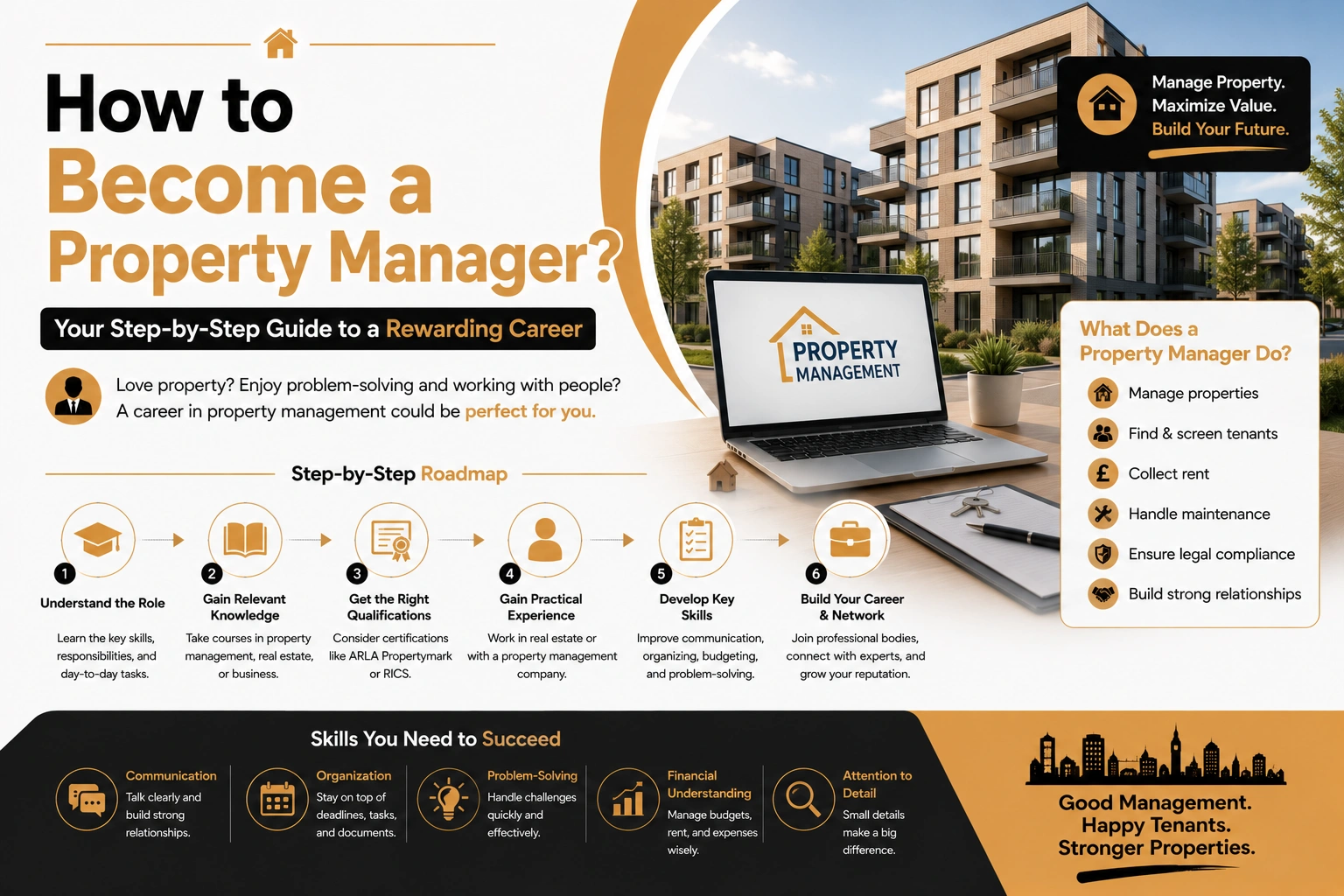
Step 1: Understand the Role
A property manager does not only collect rent. You handle tenant inquiries, arrange maintenance, conduct property inspections, and ensure legal compliance. The job splits into two main areas.
Residential property management covers houses, flats, and apartments. You deal with families, professionals, and students. Commercial property management covers offices, retail units, and industrial spaces. You deal with business tenants and longer leases.
Whether you choose residential or commercial, you must have strong communication skills.
Step 2: Get the Right Qualifications
You do not need a degree to become a certified property manager. The most recognised UK qualification is the ARLA Propertymark Level 3 Award in Residential Letting and Property Management.
This course takes 6-12 months to complete. It covers landlord and tenant law, health and safety, and property maintenance. Many property management companies prefer candidates with this qualification.
Some property management firms also accept the CIH Level 3 Certificate in Housing Practice. Both are acceptable in the field.
Step 3: Gain Experience
Qualifications alone will not get you hired. Experience matters. Start by applying for assistant property manager roles or admin positions at a rental management company.
Working under an experienced property manager teaches you the real job. You learn how to handle difficult tenants, emergency repairs, and legal disputes. Many property services roles also provide valuable transferable skills.
Consider shadowing a local property management firm for a few weeks. Some offer unpaid work experience that leads to paid roles.
Step 4: Understand the Costs
Becoming a property manager requires some upfront investment. Here is a breakdown of the typical property management cost for training.
| Expense | Approximate Cost |
| ARLA Propertymark Level 3 course | £400 – £800 |
| Exam fees | £100 – £200 |
| ARLA membership (annual) | £150 – £250 |
| Professional indemnity insurance | £100 – £300 |
| DBS check | £50 – £80 |
Some employers cover training costs. Ask about this during interviews. The property management cost is usually recovered within your first few months of work.
Step 5: Find Your First Role
Search for “property management near me” on job sites like Indeed, Reed, and Totaljobs. Approach property management companies near me directly with your CV. Many smaller firms do not advertise vacancies.
Your CV should highlight any property services experience, even if it is from a different industry. Customer service, admin work, and trade experience all count.
Entry-level property manager salaries in the UK start at £22,000-£28,000 per year. With experience, this rises to £35,000-£50,000 per year.
Step 6: Grow Your Career
Once you have experience, you have options. You can choose commercial property management or residential property management. Each has a different earning potential and daily tasks.
Some property managers start their own property management firm. Others move into rental property management for large portfolios. The career path is flexible.
Continuing education keeps you competitive. Look for the certified property manager designation from the Institute of Residential Property Management. This advanced qualification opens senior roles.
Conclusion
Becoming a property manager in the UK is achievable without a degree. Get certified with ARLA Propertymark, gain experience at a rental management company, and build your property services portfolio. The demand for qualified property managers is increasing annually. That is where experienced hands who understand residential property management make the real difference.
FAQs
Is a professional degree mandatory to become a property manager?
No, you do not need a degree. If you have a ARLA Propertymark Level 3 Award, it’s great. Many successful property managers started without a university education.
How much time does it take to become a certified property manager?
The ARLA Level 3 course takes 6-12 months to complete. You can work as an assistant property manager while studying. Full certification requires passing the exams.
What is the typical salary of a property manager in the UK?
Entry-level property manager salaries start at £22,000-£28,000 per year. Senior property managers earn £35,000-£50,000 per year. London and large cities pay more.
Can a property manager work remotely?
Some property management services allow remote work for admin tasks. However, property inspections and tenant visits require in-person attendance. Most roles are hybrid.
What is the difference between residential property management and commercial property management?
Residential property management usually includes houses and flats for families and professionals. Commercial property management involves offices, shops, and industrial units. Commercial leases are usually more complex.
What is the best way to find property management companies near me?
Search on Google, LinkedIn, and job sites. Use the phrase “property management companies near me” to find local firms. Approach them directly with your CV.
Is ARLA Propertymark certification really worth it?
Yes, ARLA is the gold standard for UK property managers. Most property management firms require it or strongly prefer it. The course pays for itself within your first year.
Is it beneficial to start my own property management firm without experience?
It is possible but risky. Most successful property management firm owners first worked as property managers for several years. You should learn it before starting a business.
What types of insurance cover does a property manager need?
You need professional indemnity insurance and public liability insurance. Some property management companies near me also require bond protection. Costs range from £100 to £300 annually.
How do I become a certified property manager in Scotland?
The process is similar but with different laws. Look for the CIH Scotland qualification instead of ARLA. Rental property management rules vary between England, Scotland, and Wales.