
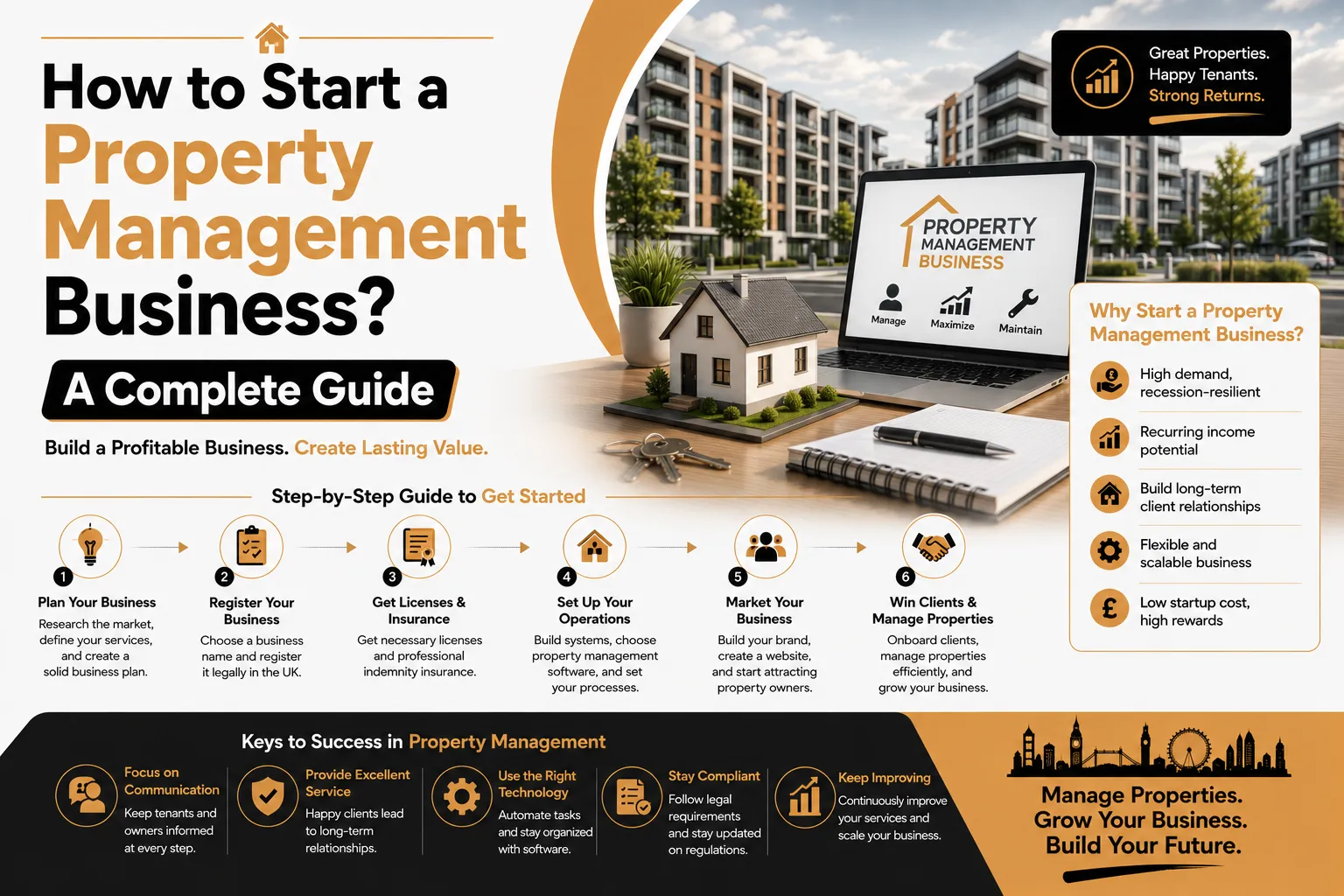
How to Start a Property Management Business? A Complete Guide
Want to start a property management business but think you need a fancy office and a team of staff? You do not. You need under £1,000, a laptop, and three landlord clients to cover your first year of expenses. The lean startup approach works: pick residential properties first, get ARLA Propertymark qualified, find clients through word of mouth, and grow slowly.
Commercial property management can wait until year two or three. This guide walks you through seven steps to launch a profitable property management business, find property management companies for market research, and avoid the mistakes that sink new property management firms.
Step 1: Pick Your Niche and Start Small
Not every property management business needs to do everything at once. Start with residential properties for local landlords. Leave commercial property management for year two or three.
What you will need at the start:
- A laptop and phone
- A simple CRM or spreadsheet
- Three local landlords who trust you
Commercial real estate property management can wait. Master residential first, then expand when you have a steady income.
Step 2: Get Legal, Registered, and Insured
A property management company without proper paperwork is a risk. Get yourself registered with HMRC as a sole trader or limited company. Open a separate business bank account to keep client money separate from your own.
Essential protections for your new business:
- Professional indemnity insurance
- Public liability insurance
- ARLA Propertymark qualification (recommended)
Estate management companies often require proof of insurance before contracting with you. Get this sorted before your first client signs up.
Step 3: Set Up Your Systems Before Taking Clients
Property management firms that fail usually skip this step. Choose property management software for rent collection and maintenance logs. Build a list of trusted local contractors, including plumbers, electricians, and cleaners.
Your basic systems checklist:
- Tenant referencing process
- Maintenance request tracking
- Rent collection and arrears reporting
Commercial property management needs more complex systems, so start simple. You can upgrade your software as your portfolio grows.
Step 4: Find Your First Three Clients Without Paid Ads
The best property management business grows through referrals, not ad spend. Look for “property management companies near me” and check their online reviews. Check where they are performing well and where they lack.
Where to find landlords without spending money:
- Facebook community groups for local landlords
- Local investor meetups (check Eventbrite)
- Word of mouth from tradespeople you already know
Most property management companies started with one landlord and grew from there. Your first client is the hardest. The second comes easier.
Step 5: Price Your Services to Win (Not Undersell)
A property management business needs profitable pricing to survive. Use the percentage model (8-12% of rent) for residential properties. Offer fixed fees for HMOs and larger portfolios.
Your pricing toolkit has three options:
- Percentage of monthly rent
- Fixed fee per property
- À la carte for tenant finding only
Commercial property management companies typically charge fixed fees of £100-£200 per unit. Do not underprice just to win a client. Low fees means poor service and no satisfaction.
Step 6: Plan Your Growth from Solo to Team
Property management firms that grow too fast fail. Master your first 20 properties before hiring anyone. Then add an assistant for admin and maintenance coordination.
Growth milestones to follow:
- 1-20 properties: solo with software
- 21-50 properties: hire an assistant
- 51+ properties: build a full team
Commercial real estate property management requires more staff, so grow carefully. Each new hire should pay for themselves within three months.
Step 7: Avoid These Common Pitfalls
Starting a property management business is rewarding but risky if you ignore these mistakes:
- Underpricing to win clients (you will resent the work)
- Overpromising response times (tenants expect 24-hour replies)
- Poor record keeping (HMRC and landlords will ask for proof)
Estate management companies that fail usually skip legal compliance or grow too fast. Do not be one of them. Slow and steady wins this race.
Conclusion
Starting a property management business in the UK is achievable without a big budget or a team. Pick a niche, get insured, set up simple systems, and find your first three landlords through word of mouth. Price fairly but profitably, grow slowly, and avoid common pitfalls. That is where consistent effort makes the real difference.
FAQs
Do I need qualifications to start a property management business?
No, qualifications are not legally required, but ARLA Propertymark Level 3 builds trust. Most property management companies prefer hiring qualified staff. Landlords also feel safer with certified managers.
How much money do I need to start a property management business?
You can start with under £1,000 for insurance, software, and basic marketing. A laptop and phone are your only major expenses. Commercial property management may need more upfront for software.
Can I run a property management business from home?
Yes, most property management firms start from a home office these days. You do not need a physical office face. Tenants and landlords expect digital communication and site visits only.
How do I find my first landlord client?
Approach local landlords directly with a free portfolio review. Type “property management companies near me” into your search engine and look at their feedback. Word of mouth from tradespeople also works well.
What insurance does a property management business need?
A professional indemnity and public liability insurance is required. Some commercial property management contracts also require fidelity bond insurance. Costs range from £200 to £500 annually.
How many properties can one person manage alone?
Most solo property management businesses can handle 20 to 30 properties comfortably. Beyond that, you need an assistant or software upgrades. Commercial real estate property management has a lower volume per manager.
How do I price my property management services?
Use percentage models (8-12% of rent) for residential properties. Use fixed fees (£50-£150) for HMOs and commercial units. Property management companies often offer both options.
Does commercial property management earns you more profit than residential?
Yes, commercial property management typically has higher fees per unit (£100-£200 vs £50-£100). However, commercial tenants expect faster service. Start with residential, then add commercial later.
How long does it take to break even in a property management business?
Most property management firms break even within 6 to 12 months. You need 10 to 15 properties paying monthly fees. Estate management companies may take longer due to larger overheads.
Can I start a property management business while working full-time?
Yes, start as a side business with 5-10 properties. Handle evening and weekend maintenance calls. Once your property management business covers your salary, transition to full-time.